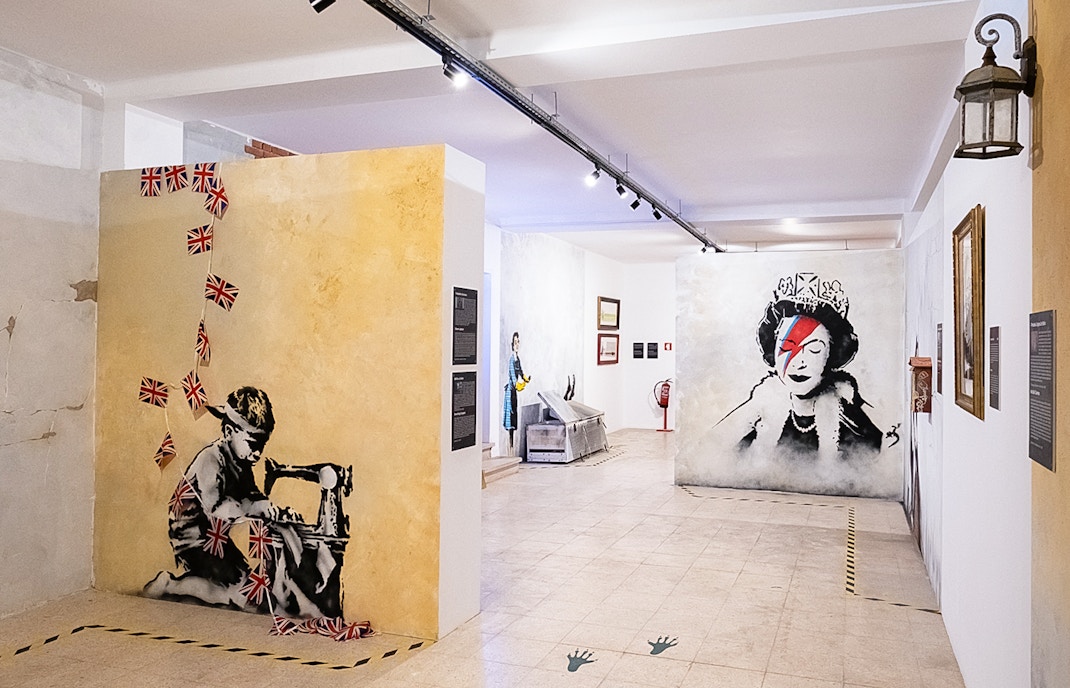
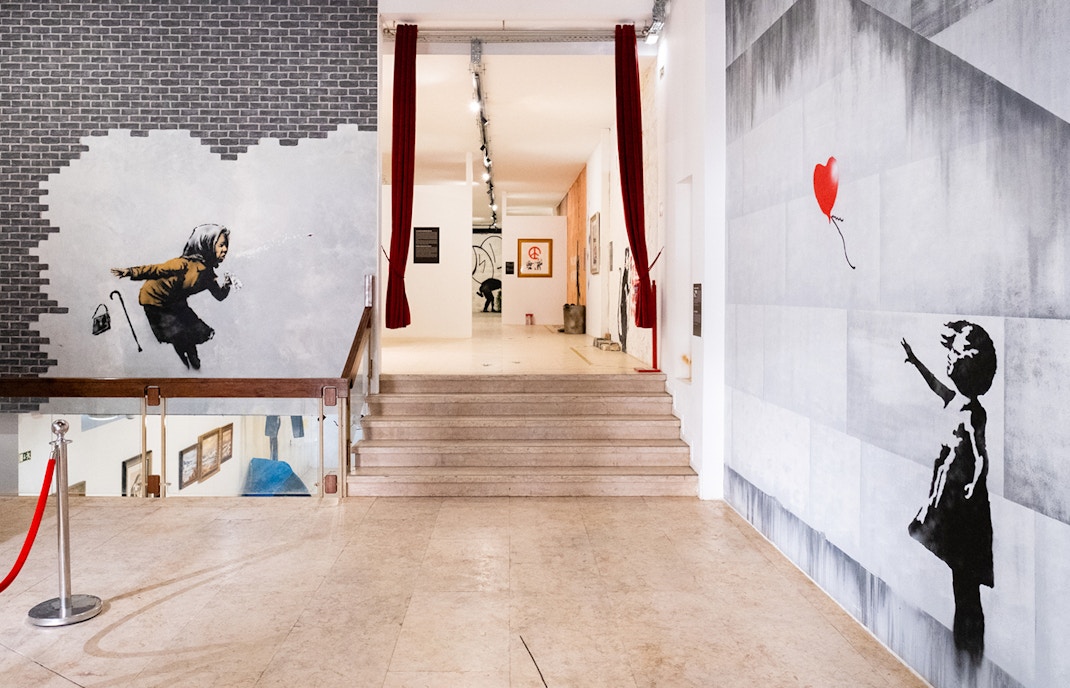
This section showcases large-scale recreations of Banksy’s most recognizable murals. You get to experience famous works originally painted on streets, walls, and checkpoints, presented at full scale with contextual background.
The World of Banksy stands out as a compelling cultural experience because it brings street art into a structured, accessible setting without stripping it of its edge. For visitors in Lisbon, the exhibition offers a rare opportunity to engage deeply with Banksy’s witty and satirical artideas without traveling across multiple cities or countries.
What makes this attraction particularly impactful is its focus on storytelling. Each artwork or installation invites you to reflect on themes such as war, consumerism, surveillance, freedom, and social inequality. Rather than presenting art in isolation, the exhibition contextualizes Banksy’s work within global political and social movements, making it relevant regardless of your background or familiarity with street art.
The exhibition layout encourages slow exploration. You move through rooms that recreate the scale and atmosphere of real-world locations where Banksy’s originals appeared. This approach helps preserve the emotional weight of the works while the explanations help set the content for each work of art.
Another reason this attraction resonates is its broad appeal. Art enthusiasts appreciate the visual commentary and symbolism, while casual visitors find the messages direct and emotionally engaging. Whether you’re traveling alone or with your family, there’s something here for everyone.
In a city known for history, architecture, and traditional art forms, the World of Banksy adds a contemporary counterpoint. It reflects modern urban expression and invites visitors to consider how art can challenge authority, provoke thought, and inspire dialogue in public spaces.
Book World of Banksy tickets
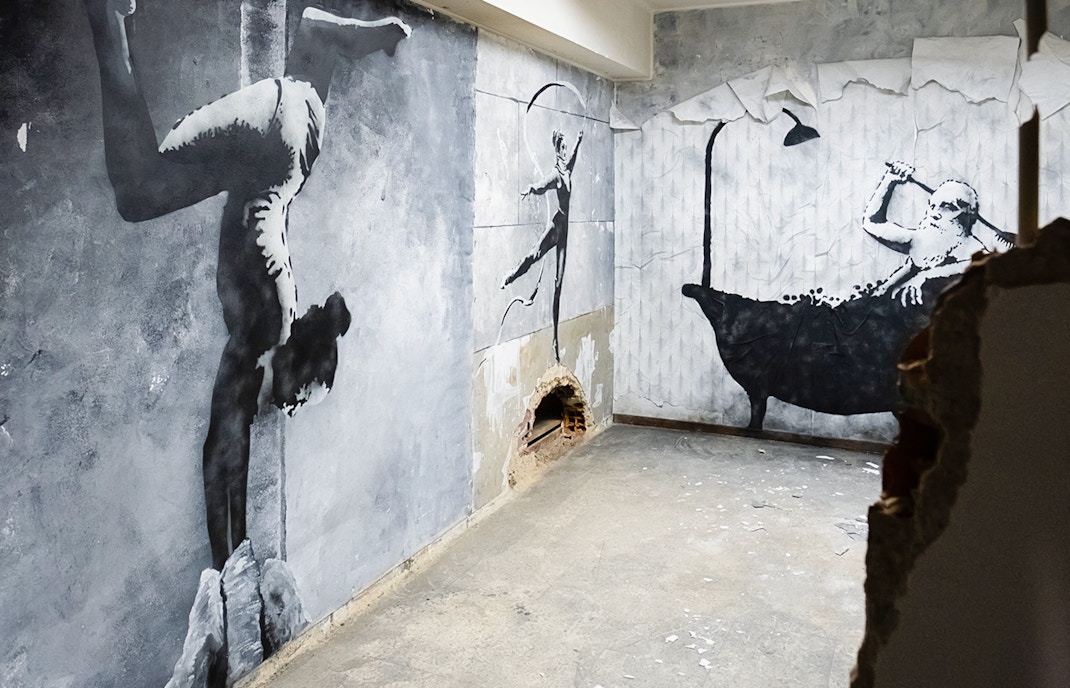
This section showcases large-scale recreations of Banksy’s most recognizable murals. You get to experience famous works originally painted on streets, walls, and checkpoints, presented at full scale with contextual background.

These pieces focus on Banksy’s sharp critiques of war, capitalism, migration, and state control. The artworks use irony and symbolism to deliver messages that remain relevant across borders and generations.

Banksy’s signature characters appear throughout the exhibition. Rats symbolize resistance and survival, while children often represent innocence, hope, or loss within political and social systems.

Some rooms recreate environments where Banksy’s works originally appeared. These immersive spaces help visitors understand how location and setting amplify the impact of street art.
The World of Banksy is part of a traveling exhibition concept that has appeared in several major cities worldwide. Rather than functioning as a traditional museum, it operates as a curated experience designed to introduce Banksy’s work to a wider audience. The Lisbon edition follows the same curatorial philosophy, focusing on accessibility and education.
Banksy rose to prominence in the late 1990s as a street artist in the United Kingdom, quickly gaining international attention for his politically charged stencils. Over time, his works appeared across Europe, the Middle East, and the United States. The exhibition draws from this global body of work, recreating pieces that are otherwise temporary, destroyed, or inaccessible.
While Banksy himself does not participate in or authorize these exhibitions, they have become popular entry points for audiences curious about his influence and message. The Lisbon installation reflects the growing global interest in street art as a serious and impactful art form.
No. The exhibition is not officially authorized by Banksy, who has consistently distanced himself from commercial exhibitions and maintains complete anonymity.
Most visitors spend between one and one and a half hours exploring the exhibition, depending on their interest in finding out about Banksy’s background and soaking in all the installations.
Yes, although some artworks address serious themes. Parents may wish to discuss the social and political messages with younger visitors during the visit.
Banksy rose to prominence in the 1990s in the United Kingdom and gained almost immediate popularity for his street art that depicted a sharp critique of the social, political, and cultural landscape at the time.
No, the elusive street artist’s identity is still a subject of much speculation. While there have been supposed descriptions of what he looks like, and interviews with individuals identifying as Banksy, his true identity still remains unconfirmed, adding to the appeal of the experience.