Codfish History Interpretation Centre visitor guide
The Codfish History Interpretation Centre is a compact waterfront museum best known for turning Portugal’s bacalhau story into an immersive, hands-on visit. Most visits take about an hour, and the route is easy to follow, but timing matters more than people expect on busy summer afternoons. You’ll get more from it if you slow down for the political and culinary sections instead of treating the dory simulator as the whole experience. This guide covers entry, timing, route, and what to prioritise.
Quick overview: Codfish History Interpretation Centre at a glance
If you want the fast version before planning the rest of your day in Baixa, start here.
- When to visit: Daily, 10am–7pm. The first hour after opening is noticeably calmer than 2pm–5pm, because most drop-in visitors arrive after exploring Praça do Comércio and nearby riverfront sights.
- Getting in: From €4 for standard entry. Reduced admission starts at €2, and Lisboa Card holders enter free; most visitors can book last minute year-round without much risk.
- How long to allow: 1–1.5 hours for most visitors. The visit runs longer if you use the companion app, linger in the recipe room, or read the Salazar-era materials closely.
- What most people miss: The propaganda gallery and the Bacalhau 20.20 sustainability section add the most context, but many visitors rush past them after the dory simulator.
- Is a guide worth it? Usually no for independent travelers, because the museum is compact and the app covers the essentials; a guided visit adds more value for school groups or anyone who wants deeper political and maritime context.
Jump to what you need
🕒 Where and when to go
🗓️ How much time do you need?
🎟️ Which ticket is right for you?
🗺️ Getting around
🐟 What to see
♿ Facilities and accessibility
Where and when to go
How do you get to the Codfish History Interpretation Centre?
The museum sits in the eastern wing of Praça do Comércio on Lisbon’s riverfront, about a 10-minute walk downhill from central Baixa and roughly 5 minutes from Terreiro do Paço metro.
Torreão Nascente, Praça do Comércio, Lisbon, Portugal | Find on Google Maps
- Metro: Terreiro do Paço station (Blue Line) → 5-minute walk → follow the square arcades toward the riverfront east wing.
- Tram: Tram 15E to Praça do Comércio → 2-minute walk → easiest if you are already coming from Belém.
- Bus: Praça do Comércio stops → 2–5-minute walk → several riverfront and downtown routes stop nearby.
- Taxi/rideshare: Drop-off at Praça do Comércio → 2-minute walk → useful if you want a flat approach with minimal walking.
Which entrance should you use?
The setup is simple here, and the main mistake is overthinking it as if it were a large museum with separate access lanes. For most visitors, this is a straightforward walk-in attraction with one public entrance.
- Main entrance: Located in the eastern wing of Praça do Comércio. Best for all ticket holders, Lisboa Card users, and on-the-day visitors. Expect 0–10 minutes wait during summer afternoons.
When is Codfish History Interpretation Centre open?
- Monday–Sunday: 10am–7pm
- Last entry: 6pm
When is it busiest? Summer afternoons, especially from July to August and on rainy or very hot days, tend to feel busiest because the museum becomes an easy indoor stop for waterfront visitors.
When should you actually go? Go at 10am or after 5pm if you want quieter galleries and more time at the interactive stations without groups bunching around the dory simulator.
How much time do you need?
| Ticket type | What's included | Best for | Price range |
|---|---|---|---|
Standard admission | Entry to all exhibits + companion app audio guide | A short self-guided visit in central Lisbon when you want a low-cost cultural stop that fits easily between bigger sights | Entry (from €4) ↗ |
Reduced admission | Entry to all exhibits + companion app audio guide | A lower-cost visit where you qualify for youth, student, senior, or group pricing and do not need added extras | Reduced entry (from €2) ↗ |
Lisboa Card admission | Entry via Lisboa Card + access to the museum’s standard visit route | A central Baixa stop where you are already using the city pass and want to maximize included attractions in one area | |
Combo: Codfish Centre + Lisbon Story Centre | Entry to Codfish History Interpretation Centre + entry to Lisbon Story Centre | A half-day around Praça do Comércio where you want broader city context before or after the cod-focused visit | |
Combo: Codfish Centre + Rua Augusta Arch | Entry to Codfish History Interpretation Centre + entry to Rua Augusta Arch viewpoint | A short cultural stop that you want to pair with a riverfront and rooftop view without planning a second major museum |
How do you get around Codfish History Interpretation Centre?
The layout is compact and sequential rather than sprawling, so it is easy to self-navigate once you are inside. What matters more is not skipping the quieter final sections after the interactive opening galleries.
Museum layout
- Introduction area: Orientation displays and the museum’s core idea of bacalhau as Portugal’s faithful friend → budget 10 minutes.
- Fishing saga galleries: Voyages, boats, maritime risk, and the White Fleet story → budget 20–25 minutes.
- Political and social section: Salazar-era campaigns, propaganda, and cod’s role in national identity → budget 10–15 minutes.
- Tasting Room and recipe displays: Digital recipe archive and cod’s culinary afterlife → budget 10–15 minutes.
- Bacalhau 20.20: Sustainability, climate pressure, and the future of cod → budget 10 minutes.
Suggested route: Start with the saga galleries while your attention is fresh, do the dory simulator early before small groups cluster around it, then slow down in the propaganda and sustainability sections, which are the parts most visitors skim.
Maps and navigation tools
- Map: The museum is small enough that entrance orientation and the room sequence usually cover what you need before you start.
- Signage: Wayfinding is clear for a self-guided visit, so you are unlikely to miss whole rooms unless you rush past the quieter back sections.
- Audio guide/app: The included companion app is available in English and Portuguese, and it adds more value than the wall text alone if you want the deeper story.
- Large outdoor POIs only: Not applicable.
💡 Pro tip: Open the companion app before you begin the first gallery, not halfway through, so you can pace the visit once instead of doubling back to match exhibits with commentary.
Where are the masterpieces inside Codfish History Interpretation Centre?

Dory simulator
Exhibit type: Immersive simulator
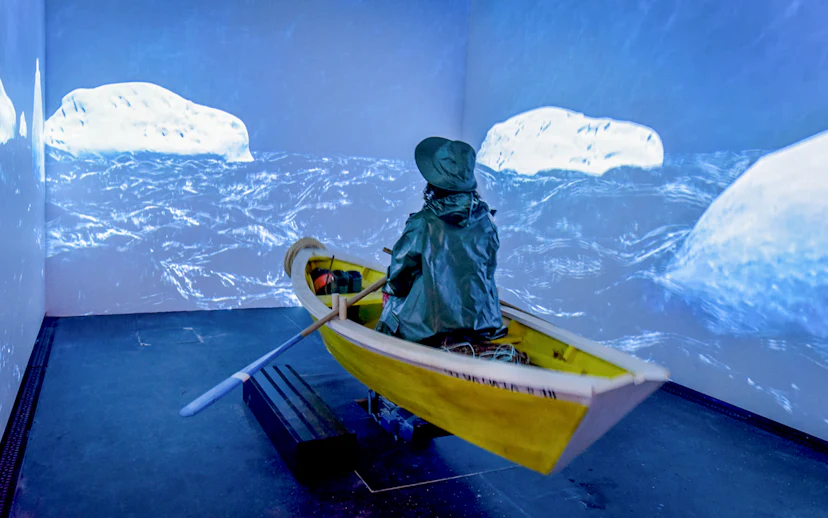
This is the museum’s most physical and memorable installation, putting you into a small fishing dory against a virtual North Atlantic backdrop. It works because it turns a food-history story into something bodily and immediate. What most visitors miss is that the point is not just the rough weather effect, but the isolation of the fishermen who worked far from the main ship in dangerous conditions.
Where to find it: In the main fishing saga section, after the early historical introduction.
A Saga gallery
Exhibit type: Multimedia history installation
This gallery lays out the long arc of Portugal’s cod voyages from the 15th century onward with maps, projections, and maritime storytelling. It gives the whole museum its backbone, because without this section the later food and political displays make less sense. Many visitors move through it too quickly and miss how strongly the museum links cod fishing to national expansion, labor, and survival.
Where to find it: Near the start of the permanent route, before the later political and culinary sections.
Salazar-era cod propaganda
Exhibit type: Political history display
This section is one of the sharpest parts of the visit because it shows codfish as more than food or trade. Posters, slogans, and campaign material reveal how the dictatorship used bacalhau to sell ideas about austerity, religion, and national discipline. The detail many people rush past is how explicitly the regime folded fishing into identity-building, which gives the museum far more depth than a simple food exhibit.
Where to find it: In the middle-to-late part of the route, after the core voyage story.
Tasting Room recipe archive
Exhibit type: Interactive culinary installation
The recipe displays are more than a novelty touchscreen. They show how cod moved from survival food to a defining part of Portuguese domestic life, with recipes stretching across regions and styles. Many visitors only skim for a familiar dish, but the richer detail is the sheer range: the archive makes clear why bacalhau became part of everyday language and ritual, not just restaurant culture.
Where to find it: In the culinary section toward the latter part of the museum.
Bacalhau 20.20
Exhibit type: Sustainability and future-focused gallery
This final section shifts the visit from nostalgia to present-day pressure, covering overfishing, climate change, supply chains, and adaptation. It is quieter and less theatrical than the simulator, which is exactly why people tend to under-value it. The most important thing to notice here is that the museum treats cod as a living question, not a finished national myth.
Where to find it: At the end of the permanent exhibition route, after the recipe and culture displays.
Facilities and accessibility
- 🎒 Lockers / luggage storage: It is best to arrive with a small day bag rather than a suitcase.
- 🚻 Restrooms: On-site restrooms are available, including accessible facilities.
- 🛍️ Gift shop / merchandise: The exit mercearia sells bacalhau products, cod pâté, canned specialties, olive oils, salt, spices, and related food souvenirs.
- 🪑 Seating / rest areas: Benches are available in some rooms, which helps if you want to pause during the self-guided visit.
- 🧂 Tasting corner: A small tasting and grocery-style area extends the culinary side of the visit and is worth saving a few minutes for at the end.
- ♿ Mobility: The museum is wheelchair accessible, with flat access, elevators where needed, a short indoor route, and accessible restrooms on-site.
- 👁️ Visual impairments: The companion app audio guide in English and Portuguese adds spoken context, though the experience still relies heavily on screens, projections, and visual interpretation.
- 🧠 Cognitive and sensory needs: The quietest time is usually the first hour after opening, while the dory simulator and multimedia rooms are the loudest and most sensory-heavy parts of the route.
- 👨👩👧 Families and strollers: The compact layout makes stroller use manageable, and the short route works well for families who do not want a half-day museum commitment.
This museum works best for children old enough to engage with screens, boats, and storytelling rather than expecting a play space or hands-on science center.
- 🕐 Time: Around 45–60 minutes is realistic with children, and the dory simulator plus recipe displays are the sections most likely to hold their attention.
- 🏠 Facilities: Accessible restrooms and a compact indoor layout make the visit easier than a larger museum with long walking distances.
- 💡 Engagement: Go to the dory simulator early, then frame the rest of the visit as the story of how one fish fed a whole country.
- 🎒 Logistics: Bring your own headphones for the companion app, skip large bags, and aim for the first hour after opening for the least crowded visit.
- 📍 After your visit: Praça do Comércio itself is an easy next stop, with open space by the river where children can reset after the museum.
Rules and restrictions
What you need to know before you go
- Entry requirement: You can enter with a standard museum ticket or a valid Lisboa Card, and reduced rates apply for eligible age groups and students.
- Bag policy: The museum’s compact layout is better suited to a small day bag than large luggage.
- Re-entry policy: Plan your visit as one continuous stop rather than expecting to step out and return later.
Not allowed
- 🚫 Food and drink: Eating through the galleries is not part of the visit, so save snacks for before or after the exhibition route.
- 🚬 Smoking / vaping: Smoking and vaping are not part of the indoor museum environment.
- 🐾 Pets: Standard pets are not part of the museum visit; service animal access should be checked on arrival.
- 🖐️ Touching exhibits: Interactive installations are meant to be used as directed, but artifacts and display elements outside those zones should be left untouched.
Photography
Personal photography is generally best treated as a low-impact activity here: take your pictures without blocking screens or interactive exhibits for other visitors. The distinction to watch for is the immersive rooms, where flash and bulky equipment can interrupt the experience in a small space. If you want anything beyond casual phone photos, confirm the house rules at the desk when you enter.
Good to know
- Last admission: Last entry is at 6pm, and arriving much later than 5:30pm makes the visit feel rushed.
- Visit style: This is a reading-and-media museum, so it lands best if you are interested in history, food culture, or Portugal’s maritime story.
Practical tips
- Booking and arrival: You usually do not need to book far ahead here, because this is a low-capacity-risk museum and many visitors decide the same day; arrive 5–10 minutes early if you want time to open the companion app before the first gallery.
- Pacing: Don’t burn all your time at the dory simulator, because the propaganda and Bacalhau 20.20 sections are what give the visit its depth and are easy to shortchange in the last 20 minutes.
- Crowd management: The best window is 10am–11am or after 5pm, because lunch-to-mid-afternoon is when Praça do Comércio foot traffic spills indoors.
- What to bring or leave behind: Bring your phone and headphones for the included app, and leave bulky bags behind if you can, because the museum is compact and not a place where luggage feels easy to manage.
- Food and drink: Eat before or after the visit rather than treating this as a lunch stop; the museum itself is short, and the better meal options are around Praça do Comércio once you finish.
- Pairing your visit: This works especially well with Lisbon Story Centre or Rua Augusta Arch, since all three fit naturally into the same part of Baixa without extra transit time.
- With children: Lead with the boat, then use the recipe room as your second stop, because those are the sections most likely to keep younger visitors engaged through the full route.
What else is worth visiting nearby?
Commonly Paired: Pena Palace
- Distance: Approximately 30 km from Lisbon, easily accessible by train or car.
- Worth knowing: This stunning example of 19th-century Romanticism offers breathtaking views and vibrant architectural details. Explore its lavish rooms and extensive gardens for a glimpse into royal history.
Pro tip: Arrive early to avoid crowds and enjoy a leisurely visit through the palace and park.
Commonly Paired: Quinta da Regaleira
- Distance: Around 30 km from Lisbon, in the enchanting town of Sintra.
- Worth knowing: Known for its mysterious gardens, this UNESCO World Heritage Site features winding pathways, underground tunnels, and the famous Initiation Well.
Pro tip: Take your time to explore the grottoes and hidden corners; guided tours can provide deeper insights into its symbolic design.
Also nearby
Lisbon Cathedral
- Distance: 700m — 10-minute walk
- Worth knowing: It adds a very different layer of Lisbon history and works well if you want to keep walking uphill into Alfama after the museum.
Casa dos Bicos
- Distance: 650m — 8-minute walk
- Worth knowing: It is a quick architectural stop on the way toward Alfama and gives you another compact cultural visit without needing transport.
Eat, shop and stay near Codfish History Interpretation Centre
- On-site: The mercearia and tasting corner are better for a quick cod-focused browse than a full meal, so think of it as a food souvenir stop rather than lunch.
- Martinho da Arcada (3-minute walk, Praça do Comércio): Historic Portuguese café and restaurant, good for coffee, pastries, or a sit-down meal right after your visit.
- Museu da Cerveja (4-minute walk, Praça do Comércio): Portuguese dishes and beer in a very convenient square-side location if you want the easiest post-museum meal.
- Baixa cafés under the arcades (2–5-minute walk, Praça do Comércio / Rua Augusta area): Best if you want something quick without committing to a longer restaurant stop.
- 💡 Pro tip: Visit the museum first and eat after, because the experience is short and you will have better dining choices once you step back out into Praça do Comércio.
- Museum mercearia: The best buy here is food-related rather than generic souvenirs, especially bacalhau products, pâté, olive oil, spices, and pantry gifts tied to the exhibition theme.
- Conserveira de Lisboa (10-minute walk, Rua dos Bacalhoeiros area): Worth the detour if you want high-quality Portuguese tinned fish and a more traditional Lisbon food souvenir.
Yes, if you want a central, low-logistics Lisbon base. Baixa puts you within walking distance of the museum, Praça do Comércio, Alfama, Chiado, and major transit, which is ideal on a short city break. The trade-off is that it feels busier and more tourist-focused than Lisbon’s more residential neighborhoods.
- Price point: The area skews mid-range to upper-mid-range, with the most central stays charging a premium for convenience.
- Best for: Visitors on a short trip who want to walk almost everywhere and fit several central sights into the same day.
- Consider instead: Chiado works better if you want more evening atmosphere and cafes, while Alfama suits travelers who care more about neighborhood character than flat walking routes.
Frequently asked questions about visiting Codfish History Interpretation Centre
Most visits take 1–1.5 hours. If you move quickly and focus only on the interactive highlights, you can finish in about 45 minutes, but the political and sustainability sections are what usually get cut short and are worth keeping time for.
No, most visitors do not need to book far in advance. This is usually a same-day or next-day decision stop, especially for people already exploring Baixa or using the Lisboa Card, and it is not an attraction that commonly sells out.
Arriving 5–10 minutes early is enough for most visits. That gives you time to sort your ticket or Lisboa Card, open the companion app, and start without losing the first part of the route to setup.
A small backpack or day bag is the safest choice here. The museum is compact, and because no dedicated locker service is highlighted, it is best not to arrive with large luggage if you want an easy visit.
Casual personal photos are usually the right approach for this museum. Because the galleries are compact and some spaces are immersive, avoid flash and bulky gear, and check with staff on arrival if you want anything beyond standard phone photography.
Yes, the museum works well for small groups, school visits, and educational outings. The route is short and structured, and the subject is focused enough that groups can cover it comfortably in about an hour, especially if they arrange added guidance in advance.
Yes, but it is best for school-age children rather than toddlers. The boat simulator, digital displays, and food-history angle help, but this is still a museum with a fair amount of reading and screen-based interpretation.
Yes, the museum is wheelchair accessible. It has flat access, elevator support where needed, accessible restrooms, and a compact route, so it is much easier to manage than a larger multi-floor museum.
Yes, there are easy food options nearby in Praça do Comércio, and the museum itself has a mercearia-style exit area linked to cod products and occasional tasting elements. For a proper meal, plan to eat outside the museum after your visit.
Yes, Lisboa Card holders enter free. That is one reason the museum works so well as a flexible add-on stop in central Lisbon, especially if you are already moving between Praça do Comércio, Baixa, and nearby attractions.
Standard admission includes access to the permanent exhibition and the companion app audio guide. Adults usually pay €4, while discounted categories pay less, making this one of the lower-cost paid museum stops in central Lisbon.