Visiting Lisbon Cathedral: your complete guide
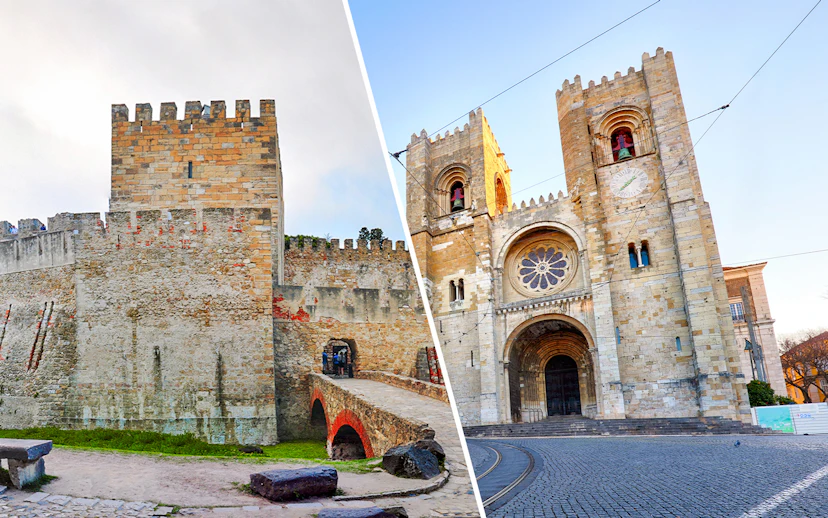
Lisbon Cathedral is the city’s oldest church, best known for its fortress-like façade, Romanesque and Gothic layers, and compact upper-level route through the high choir and treasury. The visit is shorter and smaller than many first-time travelers expect, but the paid circuit is stair-heavy enough that mobility matters more than map distance suggests. The key thing to understand is the split between free worship access and the paid tourist route. This guide covers timings, tickets, entrances, and how to fit it into Alfama.
Quick overview: Lisbon Cathedral at a glance
If you only need the essentials before you book, start here.
- When to visit: Monday–Saturday, 10am–6pm from November to May, and 9:30am–7pm from June to October; tourist visits are closed on Sundays and holy days, and the first 30–45 minutes after opening are noticeably calmer than late morning and early afternoon because Alfama walking groups, tuk-tuks, and tram-side foot traffic have not fully built up yet.
- Getting in: From €7 for the standard tourist visit, with the official digital supplement from €3 extra, and booking ahead helps more for convenience than true queue-skipping, especially on summer Saturdays rather than in quieter winter months.
- How long to allow: 45–90 minutes for most visitors, with the longer end making more sense if you linger in the treasury or take the upper route slowly on the stairs.
- What most people miss: The deambulatory and chapels are easy to rush past on the way upstairs, and the rose-window angle from the high choir is often more memorable than the exterior photos.
- Is a guide worth it? Yes, if you want Lisbon and Alfama context rather than just access; for the cathedral alone, the official digital layer usually does enough for less.
Jump to what you need
🕒 Where and when to go
🗺️ Getting around
⛪ What to see
♿ Facilities and accessibility
🚫 Rules and restrictions
What you should and should not do during your visit
🏛️ What else to visit?
🥗 Eat, shop and stay
Where and when to go
How do you get to Lisbon Cathedral?
Lisbon Cathedral sits in Alfama at Largo da Sé, a short uphill approach from Baixa and the waterfront, and it’s easiest to treat as part of an Alfama walk rather than a standalone transit destination.
Largo da Sé, 1100-585 Lisboa, Portugal
- Tram: Sé stop → right by the cathedral → the most direct option, but the area gets crowded once sightseeing traffic builds.
- Metro: Terreiro do Paço station → about a 10–12 minute uphill walk → manageable with a small bag, but cobbles make it slower than it looks on a map.
- Taxi / rideshare: Drop-off at Largo da Sé or nearby Baixa edge streets → short final walk → easiest if you’re avoiding the hill from downtown.
Which entrance should you use?
The most common mistake here is assuming all access works the same way. It doesn’t: free worship access and the paid tourist route sit within the same cathedral experience, but they serve different purposes.
- Tourist visit line: For paid visitors entering the high choir, treasury, nave, and deambulatory. Expect about 5–15 minutes during late mornings in summer and on Saturdays.
- Worship access: For prayer only in the reserved sacred area. Usually quicker, unless a service is underway.
When is Lisbon Cathedral open?
- Monday–Saturday, November–May: 10am–6pm
- Monday–Saturday, June–October: 9:30am–7pm
- Sundays and holy days: Closed to tourist visits
- Last entry: 45 minutes before closing
When is it busiest? Late mornings and early afternoons from June through September, especially Saturdays, when Alfama foot traffic makes the entrance area feel busier than the cathedral itself.
When should you actually go? Go at opening on a weekday if you can, because you’ll get the quietest nave and the clearest upper-level views before tour groups and tram traffic thicken outside.
💡 Pro tip: Lisbon Cathedral works best as your first Alfama stop, not your midday one — the upper route feels calmer right at opening, before the street outside fills with walking groups and tuk-tuk traffic.
How do you get around Lisbon Cathedral?
Lisbon Cathedral layout
Lisbon Cathedral is best explored on foot, and the full paid route is compact enough to cover in 45–90 minutes unless you stop often in the treasury.
The main focal point is the nave at ground level, but the route’s real payoff sits above and beyond it — in the high choir, upper balcony, and treasury rooms.
- Main nave → the Romanesque core and long interior axis → about 10 minutes.
- Deambulatory and chapels → side chapels and layered Gothic details → about 10–15 minutes.
- High choir → the best overhead view back through the church and toward the rose window → about 10–15 minutes.
- Treasury Museum → reliquaries, vestments, sculpture, and liturgical objects → about 15–20 minutes.
- Balcony → a short but rewarding elevated look over Alfama rooftops and toward the river → about 5–10 minutes.
Suggested route: Start in the nave, slow down at the deambulatory before climbing, then treat the high choir and balcony as one upper-level sequence — most visitors rush upstairs too soon and mentally skip the chapels that make the building feel older and more layered.
Maps and navigation tools
- Map: No detailed public visitor map surfaced in the reviewed material → the route is short enough to follow on site → save the official ticket page before arrival for hours and access rules.
- Signage: Good enough for the basic route, but not strong enough if you want deep architectural or historical context without pre-reading.
- Audio guide / app: The official Sé Digital add-on gives smartphone guidance in 6 languages → access it as a paid supplement → useful if you want light structure without joining a group.
💡 Pro tip: Don’t treat the climb as the start of the visit — the lower chapels and deambulatory make more sense before the high choir, not after it, when most people are already mentally exiting.
Get the Lisbon Cathedral map / audio guide
What are the most significant spaces in Lisbon Cathedral?

Main nave
Era: 12th-century Romanesque core with later rebuilding
This is the part that immediately explains why Lisbon Cathedral feels more fortress than lacework. The space is austere, long, and less decorative than many visitors expect, which is exactly why it carries the building’s oldest weight so well. What most people miss is how much better it reads after you’ve seen it from above in the high choir.
Where to find it: Enter through the main church and stand near the center aisle before heading toward the eastern end.
Deambulatory and chapels
Attribute: Medieval Gothic additions
These side areas are where the cathedral stops feeling singular and starts feeling layered. The change in rhythm, chapel detail, and circulation helps you read the building as something shaped over centuries rather than built in one clean campaign. Most visitors hurry past them on the way upstairs, which is a mistake if you care about the cathedral’s mixed architectural identity.
Where to find it: Walk around the eastern end of the church behind the main altar area along the side chapel circuit.
High choir
Attribute: Elevated interior viewpoint
If you’re paying for the route, this is the main reason to do it. The view back down the nave changes the scale of the church, and it gives you one of the few angles that feels unavailable from a quick free look below. What people often miss here is the rose-window perspective, which is subtler than the balcony view but more distinctive.
Where to find it: On the upper level reached through the paid visitor circuit after the lower church spaces.
Treasury Museum
Attribute: Sacred art and liturgical collection
The treasury turns the visit from ‘church only’ into a compact museum experience. You’ll see reliquaries, vestments, sculpture, and ceremonial objects that still feel tied to living worship rather than disconnected display cases. What visitors often rush past is the shift in tone: it’s quieter and more object-led than the nave, so it rewards slower looking.
Where to find it: Along the paid route on the upper museum-like section after the climb.
Balcony view
Attribute: Elevated outdoor outlook
This is not a castle-scale panorama, but it’s still one of the visit’s most satisfying moments. You get a modest but rewarding look over Alfama rooftops and some river-facing city fabric, which helps place the cathedral in Lisbon rather than leaving it as an interior-only stop. Most people overhype the view beforehand; it’s better approached as a bonus, not the whole reason to come.
Where to find it: Off the upper paid route, near the high choir level behind the façade.
Baptistery and Saint Anthony link
Attribute — Significance: Devotional association
This is one of the cathedral’s most emotionally important spaces, even though it doesn’t dominate visually. The association with Saint Anthony gives the site a deeper local identity that many first-time visitors miss if they only treat it as a quick monument stop. Without a little context, it can pass as just another side area.
Where to find it: In the lower church area, within the cathedral interior and associated devotional spaces.
💡 Don't leave without seeing: the deambulatory and chapels, which many visitors rush past on the way to the stairs, and the rose-window angle from the high choir, which is easier to miss than the balcony because the crowd flow keeps moving people outward.
Facilities and accessibility
- 🎒 Cloakroom / lockers: No official luggage storage or cloakroom surfaced in the reviewed material, so bring only a small bag and leave suitcases elsewhere in the city.
- 🚻 Restrooms: No official on-site restroom details were clearly published, so it’s smarter to use facilities in Baixa or Alfama before you start the paid route.
- 🍽️ Cafe / restaurant: No official cathedral café surfaced in the reviewed sources, and the visit works better as a short heritage stop between meals than as a place to linger.
- 🪑 Seating / rest areas: The lower church offers some pause points for a brief stop, but the ticketed route is built around stairs and short standing visits rather than extended rest breaks.
- ♿ Mobility: Accessibility is partial at best, because the core paid route includes steep stairs and uneven historic surfaces, and current seller guidance does not treat it as wheelchair-accessible.
- 👁️ Visual impairments: No detailed official access guide for tactile or audio-support tools surfaced in the reviewed material, so visitors who need structured interpretation should plan extra support in advance.
- 🧠 Cognitive and sensory needs: The quietest window is usually right after opening on weekdays, while late mornings feel busier because of Alfama foot traffic, tram-side crowds, and tour groups outside.
- 👨👩👧 Families and strollers: Strollers are manageable only in a limited way at ground level, but the paid route’s stairs and the cobbled approaches make a baby carrier easier than a pushchair.
Lisbon Cathedral suits older children best because it’s short, atmospheric, and easy to pair with a wider Alfama day, but it is not built around hands-on family activity.
- 🕐 Time: 30–45 minutes is realistic with young children, and the high choir plus the balcony view are the most rewarding parts if they can manage the stairs.
- 🏠 Facilities: No strong family-specific amenities surfaced in the reviewed material, so treat this as a brief stop rather than a place for feeding breaks or downtime.
- 💡 Engagement: Ask children to spot the tram outside, then compare the cathedral from street level and from the upper route so the visit feels like a small before-and-after mission.
- 🎒 Logistics: Bring water, keep bags light, and avoid bulky strollers because the cobbled approach and stair-heavy route add friction quickly.
- 📍 After your visit: São Jorge Castle is the easiest child-friendly next stop nearby if you want to turn a short church visit into a bigger Alfama outing.
Rules and restrictions
What you need to know before you go
- Entry requirement: You need a tourist visit ticket for the high choir, treasury, nave, and deambulatory, while access for prayer and worship is limited to a separate free sacred area.
- Bag policy: No official storage or cloakroom surfaced in the reviewed material, so bring a small bag and leave larger luggage elsewhere.
- Re-entry policy: Re-entry rules are not clearly published, so treat the paid route as a one-way visit and finish restroom or snack stops first.
- Dress guidance: Modest clothing is the safest choice because this is an active cathedral, not a museum-only monument.
Not allowed
- 🚫 Food and drink: Finish snacks and open drinks before you enter, because the cathedral functions first as a place of worship and only second as a visitor site.
- 🚬 Smoking/vaping: Smoking and vaping are not appropriate inside the cathedral or in the immediate visitor flow at the entrance.
- 🖐️ Touching exhibits: Treasury objects, barriers, and sacred furnishings are for viewing only, which matters even more in a living religious space than in a conventional museum.
Photography
- Photography is generally treated more flexibly in visitor areas than in the prayer space, but this is not the place for intrusive gear or aggressive shooting.
- Keep your camera use discreet, especially if people are praying, and don’t assume flash, tripods, or selfie sticks will be welcome just because you’re on the paid route.
Good to know
- The biggest visitor misunderstanding is that the whole cathedral is either free or paid — in reality, free worship access and the paid tourist circuit coexist, and they are not the same experience.
- Some older attraction copy still foregrounds the cloister and Roman remains, but the current standard route is best understood as the high choir, treasury, nave, and deambulatory unless your live ticket says otherwise.
Practical tips
- Book ahead if you want convenience, not because Lisbon Cathedral behaves like a hard-to-get timed monument; arriving 10–15 minutes early is enough, especially since some third-party bookings still need on-site validation.
- Don’t oversell the visit to yourself. The paid route is usually 45–90 minutes, so it works best as part of Alfama rather than as the only paid stop in your morning.
- Save a bit of energy for the upper route. The high choir and balcony are the clearest payoff, and the steep stairs matter more than the cathedral’s short overall visit time suggests.
- The best crowd-management move here is to enter right at opening on a weekday, when the nave still feels quiet and the street outside hasn’t yet filled with walking groups, tuk-tuks, and tram-watchers.
- Bring a small bag and wear shoes that handle cobbles well. The hill and paving around Largo da Sé slow you down more than the map suggests, especially if you’re continuing uphill to the castle.
- Eat before or after, not during. No official cathedral café surfaced in the reviewed material, so this stop works better between breakfast in Baixa and lunch deeper in Alfama than as a midday break point.
What else is worth visiting nearby?
Commonly paired: São Jorge Castle
São Jorge Castle
Distance: 9 minutes on foot — uphill walk through Alfama
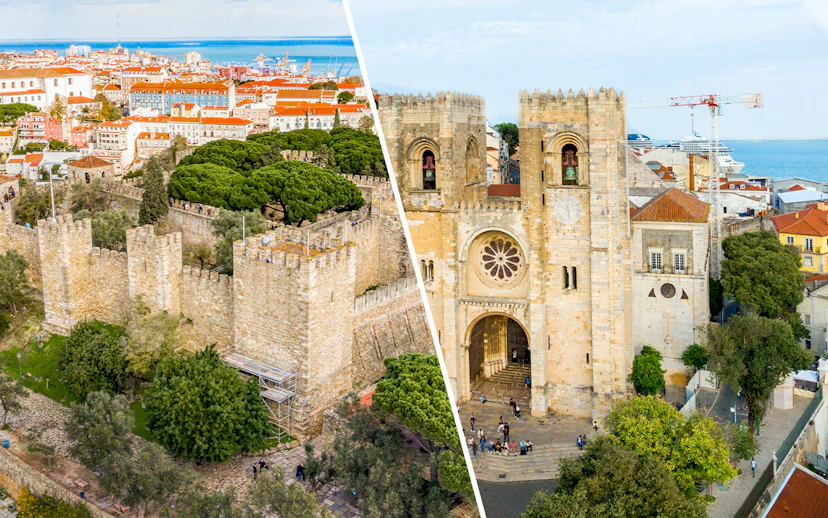
Why people combine them: This is the strongest same-neighborhood pairing in Lisbon, because the cathedral gives you history and the castle gives you the big-view payoff the cathedral only hints at.
✨ Lisbon Cathedral and São Jorge Castle are most commonly visited together — and simplest to do on a combo ticket. The practical advantage is one planned Alfama route instead of buying the neighborhood’s 2 anchor stops separately.
Commonly paired: Rua Augusta Arch
Rua Augusta Arch
Distance: About 900m — 12–15 minutes on foot downhill toward Baixa
Why people combine them: The contrast works well: the cathedral gives you a compact sacred interior and the arch gives you the broader city panorama that the cathedral balcony doesn’t try to be.
Also nearby
Church of Saint Anthony
Distance: Next door — about a 1-minute walk
Worth knowing: It adds useful devotional context to the cathedral visit, especially if you want the Saint Anthony connection to feel more than a passing mention.
Miradouro de Santa Luzia
Distance: About 600m — 8–10 minutes on foot uphill
Worth knowing: If the cathedral’s balcony leaves you wanting a fuller Alfama view, this is the logical next stop without committing to a full castle visit.
Eat, shop and stay near the Lisbon Cathedral
- On-site: No official café surfaced in the reviewed material, so Lisbon Cathedral is better treated as a short stop between meals than a place to pause for food.
- Better options nearby: Alfama and lower Baixa have more reliable choices than the immediate cathedral frontage, which gets busy and is better for passing through than settling in.
- Better options nearby: If you’re continuing to São Jorge Castle, eat before you start climbing so you don’t lose time hunting for lunch in the steepest part of the neighborhood.
- Better options nearby: For a calmer post-visit meal, walk back down toward Baixa rather than stopping at the first place beside the cathedral entrance.
- Pro tip: The cathedral is at its smoothest when you visit after breakfast or before lunch — once Alfama fills up at midday, food decisions waste more time than the ticket line does.
- Cathedral-area shopping: No officially confirmed gift shop or specific nearby shopping recommendation surfaced in the reviewed sources, so shop elsewhere in central Lisbon rather than building this stop around retail.
Alfama is atmospheric, photogenic, and wonderfully close to Lisbon Cathedral, but it is not the easiest base for every traveler. It suits short stays if you want old-city character at your doorstep, yet the hills, cobbles, and slower transport rhythm make it less practical than flatter central neighborhoods for longer trips or luggage-heavy travel.
- Price point: The area skews mid-range to high for well-located stays with character, and cheaper options often trade comfort for steep walks and limited vehicle access.
- Best for: Travelers on a short city break who want to walk to Lisbon Cathedral, São Jorge Castle, and nearby viewpoints without commuting back and forth.
- Consider instead: Baixa or Chiado are usually better for longer stays because they’re flatter, better connected, and easier with luggage while still keeping Alfama within easy reach.
Frequently asked questions about visiting Lisbon Cathedral
Most visits take 45–90 minutes for the paid route, while a brief free look into the worship area can take just 10–20 minutes. You’ll spend longer only if you move slowly through the treasury or pause often on the upper level. It’s a compact stop, not a half-day cathedral visit.
No, you usually don’t need to book far ahead, but booking online can still make the visit smoother. Lisbon Cathedral doesn’t have the same scarcity profile as Lisbon’s busiest timed monuments, so advance purchase is more about convenience than fear of missing out. Summer Saturdays are the clearest case for prebooking.
Usually no, because the main advantage here is purchase convenience rather than major queue savings. Some prebooked tickets still need on-site validation or exchange, so don’t assume every online ticket bypasses all waiting. This is not the kind of monument where premium queue access transforms the day.
Arrive about 10–15 minutes early, especially if your ticket needs validation on site. The bigger issue here is not airport-style security but small entrance-area friction, voucher handling, and summer foot traffic around Largo da Sé. You don’t need a huge buffer unless you’re joining a group.
Yes, but a small bag is much smarter than a large one. No official luggage storage or cloakroom surfaced in the reviewed material, and the approach includes cobbles and the paid route includes stairs. If you’re carrying suitcases or bulky daypacks, leave them elsewhere before you come.
Yes, but keep your photography discreet and don’t assume every part of the cathedral is treated the same way. Visitor areas are more flexible than the prayer space, especially if people are worshipping. Flash, tripods, and other intrusive gear are the types of things most likely to create problems in a sacred setting.
Yes, but larger group visits are best arranged in advance rather than improvised on the day. The cathedral offers group visits by request, which matters because the site is compact and the upper route isn’t ideal for loose, slow-moving clusters. Independent small groups can usually visit without much trouble.
Yes, if you treat it as a short stop rather than a full family attraction. Older children usually get more from the upper route, the balcony, and the Saint Anthony link than very young children do. With little in the way of family-specific facilities, most families do best in 30–45 minutes.
Not fully, and the paid route is not a good fit for many wheelchair users. Current seller guidance consistently flags the upper circuit as stair-heavy, with uneven historic surfaces adding to the challenge. Lower-level access may be more manageable in limited ways, but the core ticketed experience is only partially accessible at best.
Food is available near Lisbon Cathedral, but no official on-site café surfaced in the reviewed material. In practice, that means you should plan to eat in Alfama or Baixa before or after the visit rather than expecting the monument itself to handle breaks well. This is a short stop, not a food-and-rest stop.
Yes, but only partly — free access is reserved for prayer and worship, not for the full tourist route. If you want the high choir, treasury, nave, and deambulatory as part of the formal visit, you need a paid tourist ticket. This is the single biggest misunderstanding first-time visitors have.
You shouldn’t assume it is, unless your live ticket page clearly says so. Some older attraction copy still talks about the cloister and Roman remains, but the current official inclusion list focuses on the high choir, treasury, nave, and deambulatory. Buy based on the live inclusions, not older summaries.