Tickets Lisbon

Plan your visit to National Coach Museum

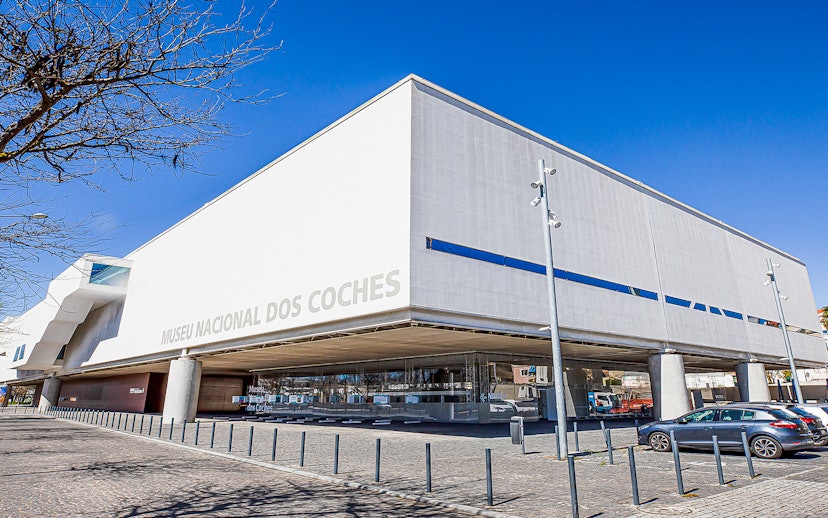
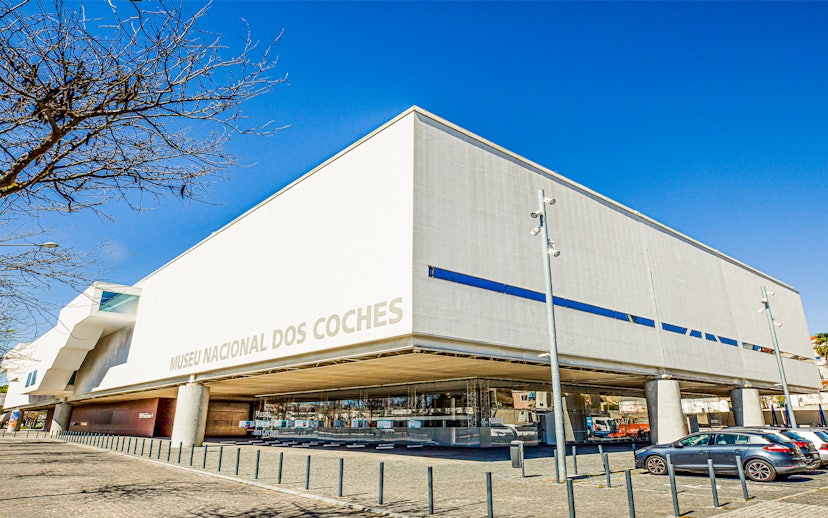
The National Coach Museum is a specialized museum in Lisbon, best known for its unmatched collection of royal coaches, sedans, and ceremonial carriages. The visit is compact rather than exhausting, but the museum’s split between a vast modern pavilion and the older Royal Riding Hall means route matters more than people expect. It’s also much calmer than Belém’s headline monuments, so timing your stop well can turn it into a relaxed highlight. This guide covers when to go, what to prioritize, and how to fit it smoothly into your Belém day.

Quick overview: National Coach Museum at a glance

If you want the practical version first, start here.

  • When to visit: Typically Tuesday–Sunday, 10am–6pm. The first hour after opening or after about 3:30pm is noticeably calmer than 11am–2pm, because Belém day-trippers usually stack this museum with Jerónimos Monastery, pastries, and riverfront stops around midday.
  • Getting in: From €15 for standard entry and audioguide from about €24. Booking ahead helps most on summer weekends and holiday periods, but this is still usually easier to enter than Lisbon’s most crowded monuments.
  • How long to allow: 1–1.5 hours for most visitors. It stretches closer to 2 hours if you use the Audioguide, pause for the diplomatic coaches, and spend time in both the modern hall and the older riding arena.
  • What most people miss: The coachmen’s uniforms, harnesses, and equestrian details add real context, and the older Royal Riding Hall is easy to rush past after the main coach gallery.
  • Is a guide worth it? Yes, if you want the political and ceremonial backstory behind the grandest coaches; otherwise, the audioguide is usually enough for a shorter self-paced visit.

Jump to what you need

Where and when to go

How do you get to the National Coach Museum?

The museum is in Belém, one of Lisbon’s busiest sightseeing districts, a short ride west of the city center and close to Jerónimos Monastery.

Avenida da Índia 136, 1300-300 Lisbon, Portugal | → Open in Google Maps

  • Tram: 15E → Belém stop → about 5-min walk → easiest if you’re arriving from Praça da Figueira or central riverside Lisbon.
  • Bus: 714, 727, 728, 729, or 751 → Belém area stops → 3–8 min walk → useful if the tram queue is backed up.
  • Train: Cascais Line → Belém station → about 10-min walk → best if you’re coming from Cais do Sodré or the coast.
  • Taxi/rideshare: Drop-off on Avenida da Índia → 1–2 min walk → simplest if you’re short on time or traveling with kids.

Which entrance should you use?

The museum is straightforward to enter, and most visitors overthink it. The main mistake is arriving at Belém’s midday rush and expecting the same easy entry you’d get earlier or later in the day.

  • Located at Avenida da Índia, at the modern pavilion entrance.
  • Expect about 10 min wait on most weekdays and 10–20 min around late-morning weekends and summer afternoons.

When is National Coach Museum open?

  • Tuesday–Sunday: 10am to 6pm
  • Monday: Closed
  • Last entry: 5:30pm

When is it busiest: Late mornings and early afternoons, especially Friday–Sunday and during summer, when Belém sightseeing traffic peaks and nearby monuments are already at full flow.

When should you actually go?: The first hour after opening is the easiest if you want space around the biggest coaches, while late afternoon is best if you’re pairing the museum with a slower riverside walk.

✨ Late morning is when Belém bunches up

By 11am, Jerónimos queues, pastry stops, and tour groups are all feeding into the same part of Belém, even if the museum itself stays calmer than its neighbors. If you want the coaches with room to look properly, come right at opening or after about 3:30pm.

How much time do you need?

Visit typeRouteDurationWalking distanceWhat you get

Highlights only

Modern building entrance → Masterpieces gallery (Felipe II's coach, Coach of the Oceans, papal carriages) → exit

45 mins to 1 hour

0.4 km

See the most spectacular coaches and understand the collection's star pieces without lingering over every detail

Balanced visit

Modern building → permanent collection galleries → cross to historic Royal Riding Hall → main ceremonial coaches → exit

1.5 to 2 hours

0.6 km

Experience both buildings, see the full narrative of royal carriages from the 17th–19th centuries, and appreciate the ornate Riding Hall's architecture

Full exploration

Modern building entrance → full permanent collection → interactive exhibits → historic Royal Riding Hall → detailed study of all coaches and accessories → café/gift shop → exit

2.5 to 3+ hours

0.8 km

Deep dive into craftsmanship, historical context, and multimedia presentations. Read labels carefully, explore the architecture, and take time to absorb the opulence of each carriage

→ How long should you set aside for the National Coach Museum?

Plan 1–1.5 hours. That's enough time to see the papal coaches (one's literally covered in gold), King Philip II's ancient carriage, and the ornate riding hall without rushing. Add 30 minutes if you're using the audio guide, examining details closely, or bringing kids.

Which National Coach Museum ticket is best for you

Ticket typeWhat's includedBest forPrice range

Standard entry ticket

Museum entry to the permanent collection

A short self-guided visit where you want flexibility and are already planning other Belém stops the same day

From €15 ↗

Entry ticket + Audioguide

Museum entry + multilingual Audioguide

A first visit where you want context on the coaches and court ceremonies

From €24 ↗

Combo ticket

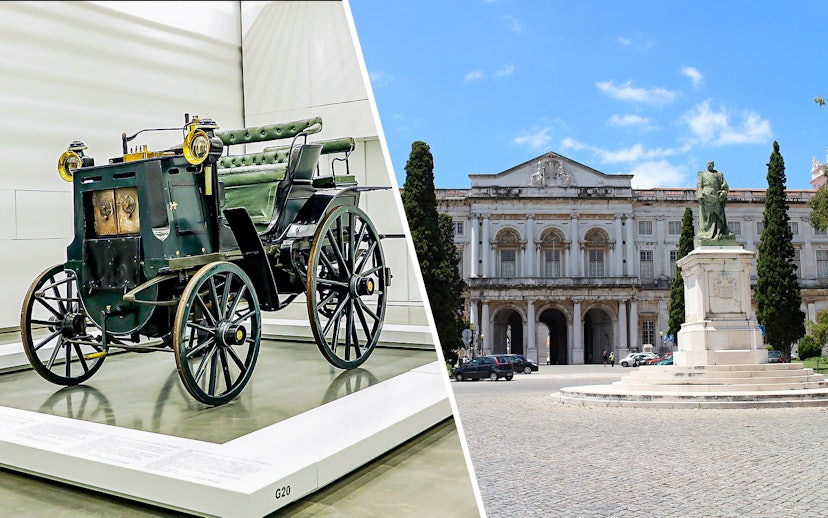
Admission to the National Palace of Ajuda + museum

A packed Lisbon itinerary where you want this museum and palace included without buying a separate tickets

From €27 ↗
💡See how Portugal's kings traveled and lived

You get the whole story! Coaches show how royalty traveled in opulence, palace reveals where they ruled and entertained. Both are within walking distance. One ticket. One perfect afternoon.

How do you get around National Coach Museum?

Museum layout

The museum is spread across a large modern exhibition hall and the older Royal Riding Hall, so it’s easy to self-navigate but just as easy to leave thinking you saw everything when you only covered the main coach gallery.

  • Modern pavilion main hall: The grand ceremonial coaches and biggest headline pieces → budget 35–45 min.
  • Raised viewing areas and circulation ramps: Better angles over the larger vehicles and decorative roofs → budget 10–15 min.
  • Royal Riding Hall: The historic setting that helps the collection make sense beyond display cases → budget 15–20 min.
  • Equestrian and supporting displays: Harnesses, uniforms, medals, and smaller court details → budget 10–15 min.

Suggested route: Start in the modern pavilion for the biggest coaches while your energy is fresh, then move to the riding hall before finishing with the equestrian displays.

Maps and navigation tools

  • Map: A simple on-site floor plan and museum wayfinding cover the main spaces → pick it up at the entrance before you begin.
  • Signage: Good enough for a self-guided visit, but you’ll get more from the museum if you know to visit both the pavilion and the riding hall.
  • Audio guide/app: Available in multiple languages → worth it if you want the history behind diplomatic and ceremonial coaches, not just the object labels.

💡 Pro tip: Don’t leave after the big central hall. The riding hall and equestrian displays are where the collection starts to feel like court life rather than just a room of beautiful vehicles.

Where are the masterpieces inside National Coach Museum?

Papal embassy coaches at National Coach Museum
King Philip II traveling coach
Coach gifted by Pope Clement XI
Sedan chairs and litters display
Coachmen uniforms and harnesses
1/5

Papal embassy coaches

Era: 1716 Baroque diplomatic coaches

These are some of the museum’s biggest visual payoffs: richly decorated coaches tied to the Portuguese ambassador’s mission to the Papal Court. The gold leaf, painted side panels, and theatrical scale make them easy to admire from a distance, but the carved allegories and diplomatic symbolism are what make them worth slowing down for. Most visitors notice the size first and miss how overtly political these vehicles were.

Where to find it: In the main modern pavilion among the grand ceremonial coaches, where the tallest vehicles dominate the central hall.

King Philip II’s traveling coach

Era: 1619 royal travel coach

This is one of the oldest and rarest pieces in the museum, used by King Philip II of Portugal during his 1619 journey. It feels less flamboyant than the later Baroque coaches, which is exactly why it matters: you can see an earlier stage of elite travel before ceremony fully took over design. Most visitors rush past it because it doesn’t glitter like the later state coaches.

Where to find it: In the main collection route, usually displayed with early coaches before the most extravagant 18th-century examples.

Coach gifted by Pope Clement XI

Era: Early 18th-century ceremonial coach

This coach stands out for the sheer extravagance of its ornament and its direct link to papal diplomacy with the Portuguese crown. It’s the sort of object that makes the museum feel unique rather than niche, because the vehicle doubles as a political statement in wood, paint, and gold. Most people photograph the exterior and miss the layers of symbolism built into the decorative program.

Where to find it: In the modern pavilion with the most elaborate Baroque and ceremonial state coaches.

Sedan chairs and litters

Type: Elite urban transport, 17th–18th centuries

The smaller vehicles are easy to overlook beside the giant gala coaches, but they help explain how status moved through the city day to day, not just on major ceremonial occasions. They also show how transport hierarchy worked at court. Most visitors walk past these because they seem less dramatic, even though they reveal more about ordinary aristocratic movement.

Where to find it: Alongside the main carriage displays, usually in the sections covering court transport beyond full-size coaches.

Coachmen’s uniforms and harnesses

Type: Court equestrian artifacts, 17th–19th centuries

This part of the museum adds the missing human layer: liveries, harnesses, medals, and riding gear that turn the coaches from beautiful shells into working ceremonial machines. It’s the difference between seeing a vehicle and understanding a procession. Most visitors reach exhibit fatigue by this point and miss how much these objects explain about labor, hierarchy, and performance.

Where to find it: In the supporting display areas beyond the main coach hall, near the equestrian and court-service artifacts.

✨Don't make the mistake most tourists do!

You walk into the modern pavilion, you gasp at the gold-encrusted papal coaches, you take your photos, and then you leave. Most people never get to what actually makes this museum extraordinary. Here's what you're missing: the actual 18th-century palace building with its insanely ornate painted ceiling, the equestrian exhibits show you how royalty actually moved through their day, what carriages they used for different occasions, and the logistics of court travel.

Facilities and accessibility

  • 🎧 Audioguide: A multilingual audioguide is available for a small extra fee and is the fastest way to add context without joining a tour.
  • 🚻 Restrooms: Restrooms are available inside the museum, and the accessible design of the building makes them easier to reach than at many historic sites.
  • 🍽️ Café: There is an on-site café, which is useful for a quick drink or light break if you’re spending a half-day around Belém.
  • 🧒 Activity area: The modern pavilion includes a hands-on area that makes the visit easier with children who need a break from object-heavy displays.
  • 🅿️ Parking: There is limited parking nearby, but Belém is much easier by tram, train, or rideshare than by trying to find a midday space.
  • Mobility: The museum is one of the easiest historic collections in Lisbon to visit with reduced mobility, thanks to ramps, elevators, and a fully accessible modern building.
  • 👁️ Visual impairments: The audioguide adds useful spoken context, which helps more than relying only on labels in the large central gallery.
  • 🧠 Cognitive and sensory needs: The museum is usually calmer than Lisbon’s busiest monuments, and late afternoon tends to be the quietest window if you want less crowd pressure.
  • 👨‍👩‍👧 Families and strollers: The route is stroller-friendly through the main visit spaces, and the open layout makes it easier to move around than in tighter historic museums.

The museum works best for school-age children, curious teens, and younger kids who like horses, royal stories, or big objects they can spot quickly.

  • 🕐 Time: Around 45–75 min is realistic with younger children, and the giant ceremonial coaches are the easiest part to prioritize first.
  • 🏠 Facilities: The activity area and the building’s spacious layout help break up what could otherwise feel like a very object-heavy museum visit.
  • 💡 Engagement: Turn the visit into a visual hunt by asking children to spot the coach with the most gold, the oldest wheels, or the most unusual painted panels.
  • 🎒 Logistics: Bring a small snack for after the visit, skip bulky bags, and aim for opening time so children can move around the main hall before it gets busier.
  • 📍 After your visit: The Belém riverfront and Monument to the Discoveries make an easy follow-up stop if you want somewhere open-air right after the museum.

Rules and restrictions

What you need to know before you go

  • Entry requirement: Standard admission, a Lisboa Card, or an eligible discounted ticket will get you in, and you should carry proof for senior, child, or disability concessions.
  • Bag policy: A small day bag is easiest here because the galleries are built around open viewing platforms and larger luggage quickly becomes awkward.
  • Re-entry policy: Plan to do the museum in one visit, because most people finish in about 90 minutes and leaving mid-visit rarely makes sense in a Belém itinerary.

Not allowed

  • 🚫 Food and drink: Keep food and open drinks out of the galleries and save them for the café or for after your visit.
  • 🚬 Smoking and vaping: Smoking and vaping are not for inside the museum buildings.
  • 🐾 Pets: Pets are not part of the standard visit, while service animals should be accommodated.
  • 🖐️ Touching exhibits: Do not touch the coaches, harnesses, or barriers, because the painted, lacquered, and gilded surfaces are fragile.

Photography

  • Photography is usually fine for personal use in the permanent galleries if you keep it low-impact.
  • The practical distinction is that delicate interiors, temporary displays, or staff-managed spaces may have tighter rules, so look for signs as you move between areas.
  • Flash, tripods, and selfie sticks are best avoided here because they disrupt sightlines and don’t work well around the raised viewing platforms.
⚠️ Once you leave the museum, your Belém rhythm changes.

Re-entry is rarely worth planning around here because the visit is short, and Belém’s lunch and monument queues build quickly outside. Finish the museum in one go, then move on to cafés or nearby sights afterward.

Practical tips

  • Booking and arrival: You usually don’t need to book far in advance here, but summer weekends and public-holiday Belém itineraries are smoother if you lock entry in 2–5 days ahead.
  • Pacing: Save your attention for the oldest and most diplomatic coaches first, because once you’ve seen several gilded state vehicles, it’s easy for the details to blur together.
  • Crowd management: The best slot is right after opening or after about 3:30pm, because the late-morning crush in Belém is driven by neighboring monuments, pastry queues, and group tours more than by this museum itself.
  • What to bring or leave behind: Bring headphones if you plan to use a phone-based guide and keep your bag small, since the open viewing areas feel much easier without extra bulk.
  • Food and drink: If you want a proper sit-down meal, eat before or after the museum rather than in the middle, because the visit is short and Belém café lines are longest around 12 noon–2pm.
  • Route planning: If you’re combining this with Jerónimos Monastery, do the monastery first only if you have an early slot there; otherwise, the museum makes a calmer and easier midday stop.
  • Value check: The €24 Audioguide is worth it if you care why the coaches matter, not just how they look, because the symbolism is what turns the collection from pretty to memorable.

What else is worth visiting nearby?

Commonly paired: Jerónimos Monastery

Distance: 800m — 10-min walk

Why people combine them: They sit in the same Belém sightseeing zone, and the contrast works well: monumental architecture first, then a shorter museum visit with a very different kind of royal history.

Know more

Commonly paired: Belém Tower

Distance: 1.2km — 15-min walk

Why people combine them: It’s the natural riverside continuation of a Belém day, especially if you want an outdoor landmark after an indoor museum stop.

Know more

Also nearby

Monument to the Discoveries

Distance: 900m — 12-min walk

Worth knowing: This is the easiest open-air add-on if you want river views and a faster visit after the museum’s indoor galleries.

→ Know more

MAAT

Distance: 1km — 12-min walk

Worth knowing: It’s a strong follow-up if you like the museum’s modern pavilion and want to keep the day going with contemporary architecture and design.

Eat, shop and stay near National Coach Museum

  • On-site: The museum café is best as a convenience stop for coffee or a quick drink, not the reason to plan your meal around the visit.
  • Pastéis de Belém (8-min walk, Rua de Belém 84–92): Classic custard tarts, fast turnover, and the most useful stop if you want something iconic without committing to a long meal.
  • Este Oeste (10-min walk, Centro Cultural de Belém, Praça do Império): A better sit-down option if you want proper lunch, more space, and a break from pastry-heavy Belém snacking.
  • Enoteca de Belém (9-min walk, Travessa do Marta Pinto 10A): Good Portuguese cooking in a more relaxed setting when the main tourist strips feel too crowded.
  • 💡 Pro tip: Eat before 12 noon or after about 2:30pm if you’re staying in Belém, because that’s when both monument traffic and café lines are easiest to handle.

Belém is scenic, flatter than much of Lisbon, and very easy for a monument-heavy day, but it’s not the best all-around base for most first-time visitors. It suits travelers who want a quieter riverside neighborhood and don’t mind using transit at night. If you want to walk to more restaurants, nightlife, and central neighborhoods, stay elsewhere.

  • Price point: The area leans mid-range to upscale, with fewer budget stays than central Lisbon and better value for travelers who care about space and quiet.
  • Best for: Short stays focused on Belém, families who want fewer hills, and travelers who like museums and riverside walks over nightlife.
  • Consider instead: Baixa, Chiado, or Avenida da Liberdade make better bases for longer stays because you’re better connected to the rest of Lisbon while still reaching Belém easily by tram, train, or taxi.

Frequently asked questions about visiting National Coach Museum

Most visits take 1–1.5 hours. If you add the Audioguide, spend time in both the modern pavilion and the older riding hall, or visit with children, you could stretch that to around 2 hours without it feeling slow.