National Palace of Ajuda visitor guide
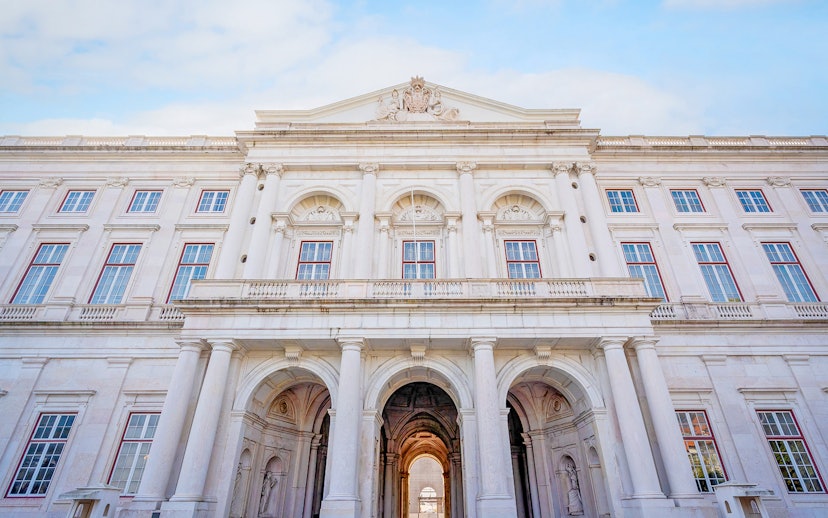
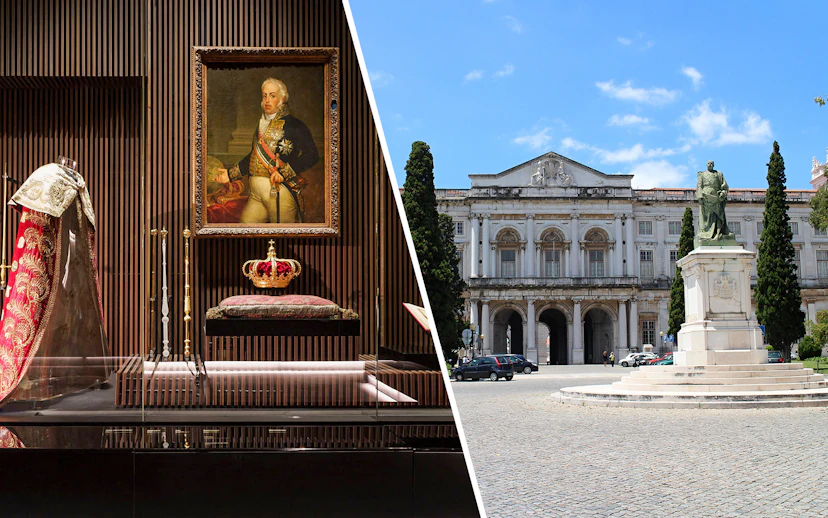
The National Palace of Ajuda is Lisbon’s former royal palace, best known for its intact 19th-century state rooms, decorative arts, and ceremonial interiors. This is a compact, room-by-room visit rather than a huge museum, and it rewards slower pacing more than most visitors expect. The biggest difference between a rushed visit and a good one is timing your uphill arrival well, since many people fold it into a wider Belém day. This guide covers timing, tickets, access, and what not to walk past.
Quick overview: National Palace of Ajuda at a glance
If you’re deciding whether to fit Ajuda into a Belém day, the short answer is yes, but it works best when you treat it as a focused palace visit rather than a quick photo stop.
- When to visit: Tuesday–Sunday, 10am–6pm. The first hour after opening is noticeably calmer than late morning, because most Belém visitors start lower down by Jerónimos Monastery and only head uphill later.
- Getting in: Standard entry, combo tickets, and a Lisbon Card upgrade are available on Headout. Booking ahead helps most if you’re building a same-day Belém itinerary and don’t want to leave the palace as the ‘if there’s time’ stop.
- How long to allow: 1–1.5 hours works for most visitors. It stretches closer to 2 hours if you slow down in the ceremonial rooms or pair the visit with the National Coach Museum.
- What most people miss: The smaller decorative arts rooms after the headline spaces are where the palace feels richest, especially the silver, furniture, and room-by-room details.
- Is a guide worth it? Usually not for this palace alone, because the route is compact and manageable, but stronger context helps if you’re pairing it with several royal and Belém landmarks in one day.
Jump to what you need
Where and when to go
Which National Palace of Ajuda ticket is best for you
| Ticket type | What's included | Best for | Price range |
|---|---|---|---|
National Palace of Ajuda Tickets | Entry to the National Palace of Ajuda | A straightforward palace visit where you want access to the royal interiors without adding a second stop | |
National Palace of Ajuda Tickets + Lisbon Card | Entry to the National Palace of Ajuda + optional 24/48/72-hour Lisbon Card + city transport access + guide/app + interactive map | A wider Lisbon itinerary where Ajuda is one stop among several museums and monuments | |
Combo (Save 8%): National Coach Museum + National Palace of Ajuda Tickets | Entry to the National Coach Museum + admission to the National Palace of Ajuda | A same-day royal heritage route where you want two closely related visits without booking separately |
Which National Palace of Ajuda ticket is best for you
| Ticket type | What's included | Best for | Price range |
|---|---|---|---|
National Palace of Ajuda Tickets | Entry to the National Palace of Ajuda | A straightforward palace visit where you want access to the royal interiors without adding a second stop | From €15 |
Combo (Save 8%): National Coach Museum + National Palace of Ajuda Tickets | Entry to the National Coach Museum + admission to the National Palace of Ajuda | A same-day royal heritage route where you want two closely related visits without booking separately | From €27.60 |
How do you get around National Palace of Ajuda?
Where are the masterpieces inside National Palace of Ajuda?

Throne Room
Room type: Ceremonial state room
This is the palace’s signature room, and it delivers the royal scale most visitors come for. The rich decoration, formal symmetry, and sense of staged power make it the clearest expression of how the palace was meant to impress guests. What people often miss is how long they stay centered on the thrones and overlook the room’s layered surfaces and furnishings around them.
Where to find it: On the main state-rooms route, among the palace’s grand ceremonial interiors.
Banquet Hall
Room type: State dining room
The Banquet Hall is where the palace feels most theatrical, with a scale that shifts the visit from elegant to unmistakably royal. It’s worth slowing down here not just for the long table setting, but for the way the room was designed to control sightlines, ceremony, and status. Many visitors snap the obvious wide shot and move on without taking in the details that make the room feel lived-in rather than staged.
Where to find it: Along the ceremonial route, after the major reception rooms on the main visitor circuit.
Music Room
Room type: Reception room
This room adds warmth to a visit that might otherwise feel all protocol and ceremony. It shows the palace at its most social, and it’s one of the best spaces for imagining how the interiors actually functioned beyond official display. The easy thing to miss is its quieter intimacy compared with the Throne Room and Banquet Hall — it’s less overwhelming, but often more revealing.
Where to find it: On the central palace route through the principal state rooms.
Chapel
Room type: Palace chapel
The chapel changes the mood of the visit and gives the palace a different rhythm from room after room of court life. It’s worth slowing down for the contrast between devotion and display, especially if you’ve just come from the more public ceremonial interiors. Visitors often move through too quickly because it feels like a transition space rather than one of the most distinct rooms in the building.
Where to find it: On the main palace route, connected to the formal interior sequence rather than set apart as a separate visit.
Decorative arts rooms
Collection focus: Silver, furniture, glassware, sculpture, and painting
These rooms are the reason Ajuda feels richer than a quick palace stop. The collection gives context to how the royal interiors functioned, and it turns the visit from a series of beautiful rooms into a more complete portrait of court life. Many visitors start skimming once they’ve seen the grand halls, which is exactly when the palace becomes most rewarding.
Where to find it: In the smaller rooms that follow and surround the main ceremonial spaces on the visitor route.
Facilities and accessibility
- 🎒 Cloakroom / lockers: Travel light for this visit, because a small day bag is far easier to manage than bulky luggage in a room-based palace route.
- 🚻 Restrooms: Use the restrooms near the start of your visit rather than waiting until you are deep into the ceremonial rooms sequence.
- 🪑 Seating / rest areas: Seating is limited once you are inside the historic rooms, so don’t plan on frequent bench stops mid-route.
- 🛍️ Gift shop / merchandise: Expect a smaller museum-style retail stop rather than a large shop, with books, postcards, and decorative-arts-themed souvenirs making the most sense.
- 💧 Water fountains / bottle refill stations: Bring water with you before you start the uphill approach, because the visit itself is short and not built around many pause points.
- ♿ Mobility: The National Palace of Ajuda is wheelchair accessible, which matters because the visit is built around connected historic rooms rather than a single open gallery.
- 👁️ Visual impairments: Ask staff at the entrance for the clearest route through the main rooms, since room order and labels matter more here than in a conventional open-plan museum.
- 🧠 Cognitive and sensory needs: Weekday mornings are the easiest window for a quieter visit, with fewer people moving through the palace in a single wave.
- 👨👩👧 Families and strollers: The route is short enough for most families, and a compact stroller is easier to handle than a large one in room-to-room transitions.
This works best for children who can engage with royal rooms, big ceremonial spaces, and visual details rather than hands-on exhibits.
- 🕐 Time: Around 45–60 min is realistic with younger children if you prioritize the Throne Room, Banquet Hall, and one or two smaller rooms.
- 🏠 Facilities: The short visit length is the biggest family advantage here, because you can do the palace without committing to half a day indoors.
- 💡 Engagement: Turn the visit into a room-spotting game by asking children to notice the biggest chandelier, the longest table, or the most elaborate throne detail.
- 🎒 Logistics: Bring a small snack for before or after, not during the route, and use the easier bus arrival if you want to avoid uphill fatigue before entry.
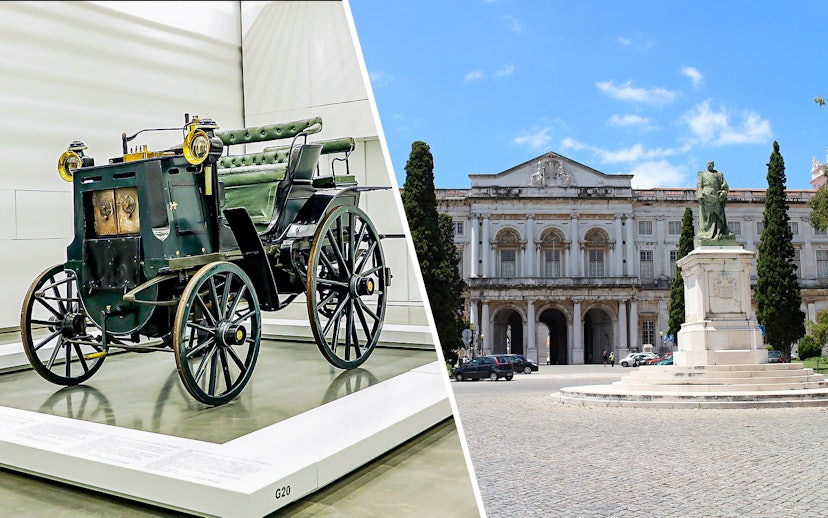
- 📍 After your visit: The National Coach Museum is the easiest child-friendly follow-up, because the carriages are visually striking and pair naturally with the palace story.
Rules and restrictions
Practical tips
- Booking and arrival: Aim to arrive 15–20 min early, because the palace itself is short and losing time on the uphill approach matters more here than at a half-day monument.
- Pacing: Don’t spend your entire visit budget in the first two grand rooms; save time and attention for the smaller interiors, where the furniture and decorative arts start doing the real work.
- Crowd management: The opening hour is your best bet, because most visitors build Ajuda into a wider Belém route and reach it only after Jerónimos Monastery or the riverfront.
- What to bring or leave behind: Bring a small bag and comfortable shoes, not because the palace route is long, but because Ajuda Hill can feel steeper than it looks before you even get inside.
- Food and drink: Eat before the visit or plan a proper stop afterward in Belém, because this is not the kind of museum with a long indoor pause built into the route.
- Pairing strategy: If you want a stronger royal-history day, combine the palace with the National Coach Museum rather than stacking too many Belém monuments into one rushed afternoon.
What else is worth visiting nearby?
Eat, shop and stay near National Palace of Ajuda
- On-site: This is best treated as a short cultural stop rather than a meal stop, so plan food before or after instead of expecting the palace to anchor lunch.
- Pastéis de Belém (18-min walk, Rua de Belém 84–92): Coffee, pastries, and savory snacks in the area’s most famous stop, and an easy reward after the downhill walk.
- Belém district cafés (15–20 min walk, downhill toward Rua de Belém): Better than staying uphill if you want more choice, a proper sit-down break, or a quick pastry and coffee after the visit.
- Museum-area cafés (around the National Coach Museum, 15–20 min walk): A practical option if you’re doing the combo route and want to eat between the two visits rather than before or after both.
- 💡 Pro tip: Eat after the palace, not before, if you’re walking up from Belém — the uphill approach is easier when you’re moving lightly, and the better café choice is downhill anyway.
- Palace gift shop: Best for postcards, palace books, and decorative-arts-themed keepsakes that actually connect to what you’ve just seen.
- Belém museum shops: Better than Ajuda for a broader browse, especially if you want design-led souvenirs or books after pairing the palace with another monument.
Ajuda and upper Belém make sense if you want a quieter base near western Lisbon’s major monuments rather than nightlife or fast metro access. The area feels calmer and more residential than Baixa or Chiado, which some travelers love and others find too removed. For a short first trip to Lisbon, it’s practical but not the most flexible base.
- Price point: The area usually feels mid-range to upper-mid-range, with fewer ultra-central convenience options than downtown Lisbon.
- Best for: Travelers who want to focus on Belém, museums, and a quieter evening pace rather than walking everywhere late at night.
- Consider instead: Baixa and Chiado are better for a first stay if you want easier citywide transport, more restaurants at night, and a simpler base for splitting time between western Lisbon and the historic center.
Frequently asked questions about visiting National Palace of Ajuda
Most visits take 1–1.5 hours. If you like period interiors and actually stop in the smaller decorative arts rooms instead of only the grand ceremonial halls, you could spend closer to 2 hours, especially if you’re visiting at a quiet time.
Yes, it’s worth booking ahead if Ajuda is part of a bigger Belém day. The palace is not usually as pressured as Lisbon’s busiest landmarks, but advance booking helps you keep your route fixed and avoid turning it into the stop you skip when time starts slipping.
Arrive about 15–20 min early. That gives you enough time to handle the uphill approach, check your ticket, and start the visit without rushing straight into the first rooms.
Yes, a small bag or backpack is the easiest option. This is a furnished palace with connected rooms, so light luggage feels far more manageable than anything bulky or rigid.
Yes, photography is usually fine as long as you follow room-specific signs and staff instructions. The safest assumption is no flash, no tripod, and no selfie stick, especially in tighter historic interiors.
Yes, the palace works well for small groups and organized sightseeing days. It’s a short, linear visit, so groups can move through it easily, but the quieter rooms are more enjoyable if everyone avoids bunching up in the first grand halls.
Yes, especially if your children enjoy visually rich interiors rather than interactive exhibits. The visit is short enough for most families, and the Throne Room, Banquet Hall, and ceremonial spaces give younger visitors an immediate sense of scale.
Yes, the National Palace of Ajuda is wheelchair accessible. That makes a real difference here, because the visit is built around connected historic rooms rather than one open-plan gallery.
Yes, but the better food plan is near rather than inside the palace route. Most visitors eat before or after in Belém, where you’ll have more choice and an easier pause point than you do on the hill itself.
Yes, if Ajuda is only one stop in a fuller Lisbon itinerary. It makes less sense if the palace is your only paid monument that day, but it becomes more useful once you’re adding several museums, monuments, and public transport.
Yes, and it’s one of the smartest pairings in this part of Lisbon. Together they make a clear royal heritage route, and the combo ticket is the simplest way to keep the day focused without booking each attraction separately.