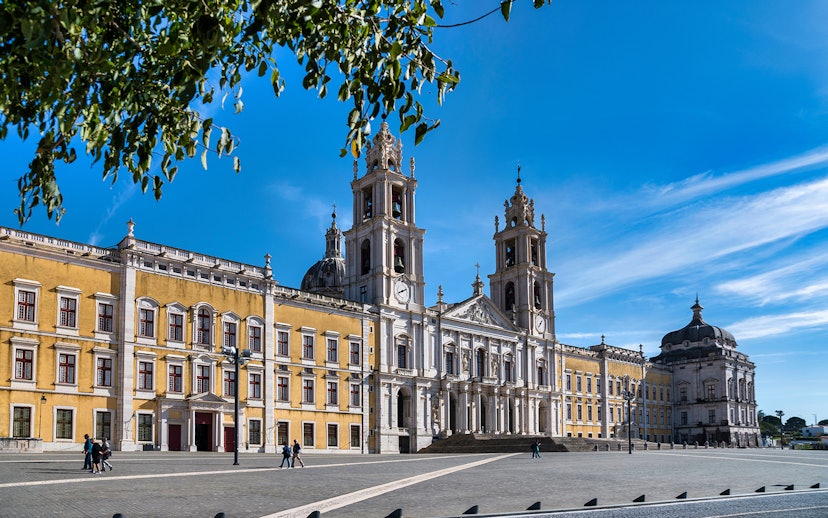
Visiting National Palace of Mafra | Your complete guide
Mafra National Palace is a vast 18th-century palace-convent complex best known for its Baroque basilica, royal apartments, and extraordinary library. It feels bigger than most visitors expect, with long corridors, multiple wings, and monastery spaces that make even a short visit more physically demanding than it looks. The biggest difference between a rushed visit and a rewarding one is timing your route around restoration closures, especially for the basilica and library. This guide helps you plan arrival, pacing, tickets, and what to prioritize.
Quick overview: Mafra National Palace at a glance
This is the section to read before you lock in your day trip from Lisbon.
- When to visit: Monday and Wednesday–Sunday, 9:30am–5:30pm. The first hour after opening is noticeably calmer than 11am–1pm, because most Lisbon day-trippers arrive later by bus or car.
- Getting in: From €15 for standard entry. Guided day trips from Lisbon usually start around $50. You can often buy standard entry on the day, but it is still worth booking ahead if you’re traveling in summer or planning around limited-access areas under restoration.
- How long to allow: 1–2 hours for most visitors. Add time if you want the Cerco Garden, slower photo stops, or a same-day visit to the Tapada.
- What most people miss: The 18th-century infirmary and monastery areas add real depth, and the Cerco Garden is the easiest place to decompress after the palace interiors.
- Is a guide worth it? Yes if you want the palace’s history to make sense, because the scale can feel overwhelming; if you’re comfortable self-guiding, standard entry works well for a shorter highlights visit.
Jump to what you need
🕒 Where and when to go
🗓️ How much time do you need?
🎟️ Which ticket is right for you?
🗺️ Getting around
👑 What to see
♿ Facilities and accessibility
Where and when to go
How do you get to Mafra National Palace?
Mafra National Palace sits in the town of Mafra, about 40km (25 mi) north of central Lisbon, and is easiest to reach by car or direct suburban bus from Campo Grande.
Terreiro D. João V, Mafra, Portugal
- Bus: Carris Metropolitana from Campo Grande → around 1 hr 10 min–1 hr 15 min → final stop is in Mafra center, a short walk from the palace.
- Car: A8 highway from Lisbon → around 40 min → the most straightforward option if you want to pair Mafra with Ericeira or the Tapada.
- Taxi / rideshare: Lisbon pick-up → around 40 min → usually the least stressful choice if you do not want to work around bus schedules.
- Parking: Paid parking is available at Parque Intermodal Alto da Vela, with free street parking nearby; arriving earlier gives you the easiest choice of spaces.
Getting here from nearby cities
Mafra works well as a regional day trip, especially if you are starting in Lisbon or pairing it with the coast.
From Lisbon
- Distance: 40km (25 mi)
- Travel time: Around 40 min by car or 1 hr 10 min–1 hr 15 min by direct bus
- Time to budget: This still leaves you enough time for the palace, the Cerco Garden, and lunch without rushing
From Sintra
- Distance: Around 40km (25 mi)
- Travel time: Around 30–40 min by car
- Time to budget: Best as a full-day pairing only if you keep each stop focused rather than trying to cover every palace in depth
From Ericeira
- Distance: 15km (9 mi)
- Travel time: Around 15–20 min by car or taxi
- Time to budget: This is the easiest same-day add-on, especially if you want seafood lunch or a beach stop after Mafra
Which entrance should you use?
There is one main visitor entrance, and the only mistake most people make is assuming the complex is quick once they are inside.
- Main entrance: Located at Terreiro D. João V. Best for all ticket holders and on-site buyers. Expect the busiest entry window in late morning, especially in summer and on weekends.
When is Mafra National Palace open?
- Monday, Wednesday–Sunday: 9:30am–5:30pm
- Tuesday: Closed
- Last entry: 4:30pm
When is it busiest? Late mornings in June–September, plus weekends and holiday periods, feel busiest because day-trippers arrive after the first opening hour.
When should you actually go? Aim for 9:30am–10:30am on a weekday if you want the grand staircase, corridor, and state rooms before group tours spread through the main route.
Which Mafra National Palace ticket is best for you?
| Ticket type | What's included | Best for | Price range |
|---|---|---|---|
General admission | Palace entry + royal apartments + monastery areas + infirmary + Cerco Garden access + basilica and library access when open | A straightforward self-guided visit where you want to see the main complex at your own pace | From €15 |
Lisboa Card | Mafra entry + access to Lisbon-region participating attractions + city pass benefits | A Lisbon-based trip where Mafra is one stop in a wider sightseeing plan and you want to avoid buying separate attraction tickets | From €31 |
How do you get around Mafra National Palace?
Palace layout
Mafra is sprawling and multi-wing rather than compact, and the biggest navigation challenge is not getting lost but underestimating how much walking the route involves.
- Central basilica core: Monumental church space and organ galleries area → allow 15–25 min when open.
- North wing: King’s apartments, ceremonial rooms, and part of the long corridor → allow 25–35 min.
- South wing: Queen’s apartments and linked state rooms → allow 20–30 min.
- Monastery and infirmary areas: Former friars’ spaces, hospital rooms, and quieter interiors → allow 20–30 min.
- Cerco Garden: Formal garden behind the main complex → allow 20–30 min if you want a break after the interiors.
Suggested route: Start with the royal apartments while your energy is highest, cross the full central corridor once rather than doubling back, then finish with the monastery side and Cerco Garden; many visitors rush the infirmary and quieter monastic spaces because the library pulls attention first.
Maps and navigation tools
- Map: Photograph the entrance plan before you start so you can keep the King’s and Queen’s wings straight once the route branches.
- Signage: Signage is good enough for the main circuit, but it is easy to lose track of what you have already covered because many rooms feel rhythmically similar.
- Audio guide / app: Audio-guide availability is not always consistent, so a live guide adds more value here than counting on extra explanation once you arrive.
💡 Pro tip: Do the full 232m corridor in one clean pass and keep your photo stops for the return-facing rooms, you will waste time retracing the same distance.
Where are the masterpieces inside Mafra National Palace?

Royal Library
Era: 18th-century royal library
The library is the room most people come for, and for good reason: walnut shelves, gilded details, and long perspective lines make it feel almost unreal. What lifts it beyond a quick photo stop is the scale of the collection, with around 36,000 rare volumes once meant to project royal power as much as scholarship. Most visitors miss the lower-floor details because they look up immediately — spend a minute on the stamped leather flooring before you leave.
Where to find it: Inside the palace complex on the library route off the main royal circuit
Basilica of Mafra
Type: Baroque basilica and royal chapel
The basilica is the spiritual core of the entire complex, with a huge dome, marble chapels, and an interior designed to overwhelm. Its six historic organs and twin bell carillons are what make it exceptional rather than simply grand. Most visitors focus on the nave and move on too fast; the side chapels and marble work are where the craftsmanship becomes clearer.
Where to find it: At the center of the complex, between the royal wings
The central corridor
Feature: 232m ceremonial passage
This corridor connects the King’s and Queen’s wings and is one of the palace’s defining experiences because it makes the building’s scale physically felt, not just intellectually understood. It is easy to treat it as a passageway, but it is really one of the monument’s great statements of royal power. Most visitors hurry through it once and do not clock how the symmetry shifts as you move between wings.
Where to find it: On the upper noble floor linking the two main palace towers
King’s Hall and state apartments
Function: Ceremonial royal rooms
These rooms show how the palace was meant to stage monarchy, with formal halls, throne spaces, imported furnishings, and an unmistakable sense of court ritual. They are where the building feels least monastic and most unapologetically royal. Most visitors remember the grandest room and miss the smaller private spaces nearby, which make the public ceremony feel more human.
Where to find it: In the north wing beyond the grand staircase and corridor
Monastery infirmary
Type: 18th-century convent hospital space
The infirmary is one of Mafra’s most quietly interesting stops because it shifts the story from spectacle to daily life inside a working religious complex. It gives the palace-convent identity real weight, especially after the decorative overload of the formal rooms. Many visitors skip it because it does not sound headline-worthy, but it is one of the few areas that makes the scale of the institution feel practical rather than symbolic.
Where to find it: Along the monastic route within the convent wing
Jardim do Cerco
Type: Formal palace garden
The Cerco Garden is the best place to reset after the interiors, with geometric paths, fountains, and long views back toward the palace. It matters because Mafra works better when you experience both its ceremonial interiors and its outdoor courtly spaces. Most visitors either skip it for lack of time or treat it as an exit route, when it is actually the calmest part of the visit.
Where to find it: Behind the palace, accessed after the main interior circuit
Facilities and accessibility
- 🎒 Lockers: There is no large baggage drop, so bring the smallest bag you can manage for the day.
- 🚻 Restrooms: Plan restroom stops around the main route rather than at the very end, because the complex is much larger than it looks from the entrance courtyard.
- 🍽️ Café: There is an on-site café that works well for coffee, pastries, or a simple break, but it is more of a convenience stop than a meal destination.
- 🛍️ Gift shop: The palace shop is the most practical place to pick up books, postcards, and monument-themed souvenirs before you leave the complex.
- 🪑 Seating / rest areas: The Cerco Garden is the easiest place to slow down and sit after the long interior walk.
- 🅿️ Parking: Paid parking is available at Parque Intermodal Alto da Vela, with free street parking nearby if you arrive earlier.
- ♿ Mobility: Expect a partly accessible visit rather than a fully barrier-free one, because the monument includes very long walking distances and historic stair-heavy sections.
- 👁️ Visual impairments: This is a strongly visual visit with limited room-by-room interpretation, so a companion or guided visit usually makes the experience easier.
- 🧠 Cognitive and sensory needs: Weekday opening hour visits are the calmest option, and the main basilica and central spaces can feel echoing and overstimulating once groups build up.
- 👨👩👧 Families and strollers: Strollers are easiest in the broader palace halls and Cerco Garden, but the longer route still feels tiring if you try to cover every wing in one go.
Mafra works best with school-age children who can handle a lot of walking and enjoy the scale, music history, or the idea of a real royal palace.
- 🕐 Time: Around 60–90 min is realistic with younger children, and the corridor, grand staircase, and garden are the easiest parts to prioritize.
- 🏠 Facilities: The garden gives you the best space to pause, reset, and let children move around after the more formal interior rooms.
- 💡 Engagement: Turn the visit into a spot-the-difference game between the King’s and Queen’s wings so the long route feels more interactive.
- 🎒 Logistics: Bring water, keep bags light, and start close to opening so children do the longest corridor before they tire.
- 📍 After your visit: The Tapada Nacional de Mafra is the easiest family-friendly follow-up if you want wildlife and outdoor space after the palace.
Rules and restrictions
What you need to know before you go
- Entry requirement: Standard admission is the default, discounts usually require valid photo ID, and children up to the age of 12 years enter free.
- Bag policy: Large bags are a bad idea here because there is no large baggage drop and the route includes long interior walks.
- Re-entry policy: Plan your visit as one continuous circuit, because the monument’s size and separate garden stop make mid-visit exits more disruptive than they sound.
Not allowed
- 🚫 Food and drink: Keep food and drinks for the café or outdoor break rather than carrying them through the palace interiors.
- 🐾 Pets: Leave pets out of the palace visit unless they are working service animals.
- 🖐️ Touching exhibits: Do not touch furniture, finishes, or room barriers, because many interiors are historic and conservation-sensitive.
Photography
- Photography is generally one of the easier parts of a Mafra visit, especially in the grand rooms and library when open, but keep it respectful and low-impact.
- Avoid flash inside sensitive interiors, and do not assume access rules stay the same during restoration periods, because room-by-room restrictions can tighten when works are underway.
- If you are carrying a tripod or large setup, expect it to be more awkward than helpful in the long, formal route.
Good to know
- Restoration closures: The basilica and library are the two spaces most likely to affect your route if works are ongoing, so check the day’s access before you go.
- Walking distance: The palace looks manageable from the outside, but the corridor, wings, and monastery areas add up fast once you are inside.
Practical tips
- Booking and arrival: Standard entry usually does not need a long lead time, but in summer it is still smart to book ahead if you are day-tripping from Lisbon and do not want arrival timing to derail the plan.
- Pacing: Save your attention for the library, the central corridor, and the quieter monastery spaces — people often burn time in the first ceremonial rooms and then rush the sections that give the complex more character.
- Crowd management: The best slot is right after 9:30am on a weekday, because Mafra’s biggest advantage is space, and that feeling fades once late-morning buses and group tours arrive.
- What to bring or leave behind: Bring comfortable shoes and a light bag only; the building is enormous, there are no large lockers, and the 232m corridor feels longer on a second pass.
- Food and drink: If you want a proper meal, do the palace first and lunch afterward in Mafra or Ericeira; the on-site café is useful for a short break, not a destination lunch.
- Route planning: If the library or basilica is temporarily closed, shift your expectations early and give more time to the infirmary, monastery wing, and Cerco Garden instead of treating the visit as incomplete.
What else is worth visiting nearby?
Commonly paired: Tapada Nacional de Mafra
Distance: Adjacent to the palace grounds, a few minutes by car to the main access point
Why people combine them: It gives you the best contrast to the palace interior—royal Baroque spectacle first, then forest, wildlife, and open space.
Commonly paired: Ericeira
Distance: 15km (9 mi), around 15–20 min by car
Why people combine them: It is the most natural post-palace stop for seafood, sea views, and a lighter afternoon after a very indoor, history-heavy visit.
Also nearby
Aldeia Típica José Franco
Distance: About 5km (3 mi), around 10 min by car
Worth knowing: This small ethnographic village makes a relaxed cultural add-on if you want something local and much less formal than the palace.
Sintra
Distance: Around 40km (25 mi), about 30–40 min by car
Worth knowing: Sintra is close enough to pair, but only do both in one day if you are happy with a highlights-only stop rather than a deep visit at either site.
Eat, shop and stay near Mafra National Palace
- On-site: There is a simple café inside the complex for coffee, pastries, and a light break, and it is most useful as a convenience stop between the palace and garden.
Better options nearby:
- Mafra town center is the practical choice if you want a quick Portuguese lunch without adding extra driving after your visit.
- Ericeira is the stronger option for a longer seafood lunch, especially if you are turning Mafra into a coast-and-culture day.
- If you arrive close to opening, do the palace first and eat after 12 noon rather than interrupting the visit halfway through the long interior route.
- Palace gift shop: The easiest place for books, postcards, and monument-themed souvenirs, and it saves you from having to look for something more specific in town afterward.
- Mafra town-center shops: Better for everyday local buys and a quick wander, but not the place to expect a big shopping detour built around the palace visit.
Mafra is calm, practical, and easy if your priority is a relaxed palace visit with room for the Tapada or the coast. It is not the most atmospheric base compared with Lisbon or Sintra, but it works well for travelers who want fewer logistics and a slower pace. If your trip is centered on wider sightseeing, you will usually get more out of staying elsewhere and visiting Mafra as a day trip.
- Price point: The area generally skews simpler and quieter than central Lisbon, with better value once you move away from the capital.
- Best for: Travelers with a car, families pairing the palace with the Tapada, and anyone who wants a low-stress overnight near Ericeira.
- Consider instead: Lisbon if you want restaurants, nightlife, and easier public transport, or Ericeira if you want the coast, better food options, and a more memorable overnight setting.
Frequently asked questions about visiting Mafra National Palace
Most visits take 1–2 hours. That is enough for the main royal rooms, the long corridor, and the monastery areas that are open that day. If the library and basilica are accessible, or you want the Cerco Garden as well, you can easily spend closer to 2.5 hours on-site.
No, you usually do not need to book far in advance for standard entry. Mafra is not normally as capacity-constrained as Lisbon’s most famous monuments, but summer weekends and day-trip schedules still make advance booking sensible if you are traveling on a fixed plan.
Usually not in the way it is at Lisbon’s busiest landmarks. Queues here are generally shorter, and the bigger time saver is arriving right after opening rather than paying extra just to shave a few minutes off entry.
Arrive 10–15 minutes early if you have pre-booked, or right at opening if you want the calmest visit. The first hour is when the palace feels most spacious, before late-morning day-trippers and groups spread through the main route.
Yes, but keep it small. There is no large baggage drop, and the palace involves long walks through formal interiors, so a big backpack becomes annoying fast and is not practical for a comfortable visit.
Yes, photography is generally one of the easier parts of the visit. Flash is best avoided in historic interiors, and room access rules can shift during restoration work, so pay attention to signs in sensitive or partially restored areas.
It is better treated as partly accessible rather than fully barrier-free. The monument includes long distances and historic stair-heavy sections, so visitors with reduced mobility should expect some limits and ask staff about the easiest route on arrival.
Yes, there is an on-site café for a short break, and Mafra town has nearby lunch options. If you want a more memorable meal, many visitors finish the palace first and then drive to Ericeira for seafood and ocean views.
No, the library is one of the areas most likely to be affected by restoration work. It is worth checking the day’s access before you go, because closures are one of the main reasons visitors leave feeling they did not get the full route.
The best balance of ease and flexibility is driving, which takes about 40 minutes. If you do not want a car, the direct bus from Campo Grande is the simplest public transport option and usually takes around 1 hour 10 minutes to 1 hour 15 minutes.