Is the Maritime Museum of Lisbon worth visiting?

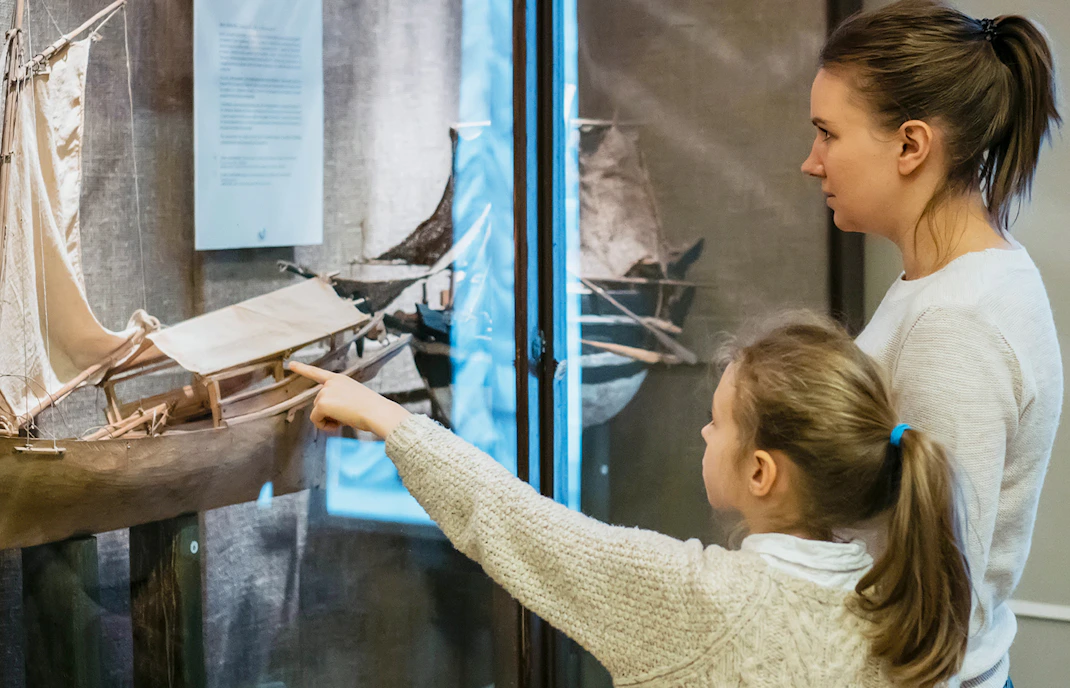
You step out of bright Belém light into stone galleries filled with rigging, polished wood, and people leaning over miniature ships as if reading maps. The museum feels calm rather than theatrical. Instead of being pushed through a landmark, you move slowly through routes, tools, vessels, and the decisions that made ocean travel possible.

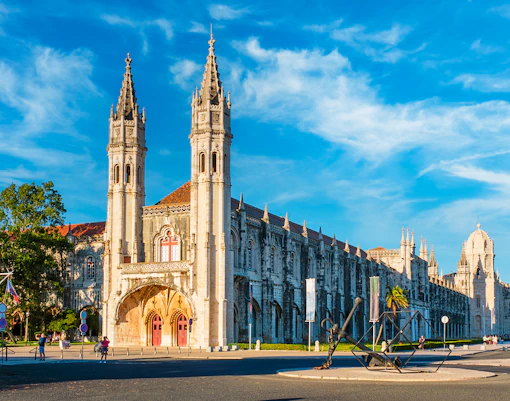
It was created to preserve Portugal’s naval memory, and that purpose still shapes the visit. Housed in the Jerónimos Monastery complex and developed under the Portuguese Navy, it connects the symbolism outside with the real instruments, models, royal vessels, and working craft behind Portugal’s seafaring identity.

What stays with most visitors is the shift from legend to mechanics. You don’t just hear that Portugal went to sea; you see how routes were plotted, how ships evolved, and how power was staged on water.

Skip it if: detailed ship models, navigation history, and long gallery reading leave you cold.

What to see inside the Maritime Museum of Lisbon?

Prince Henry gallery at the Maritime Museum
1/8

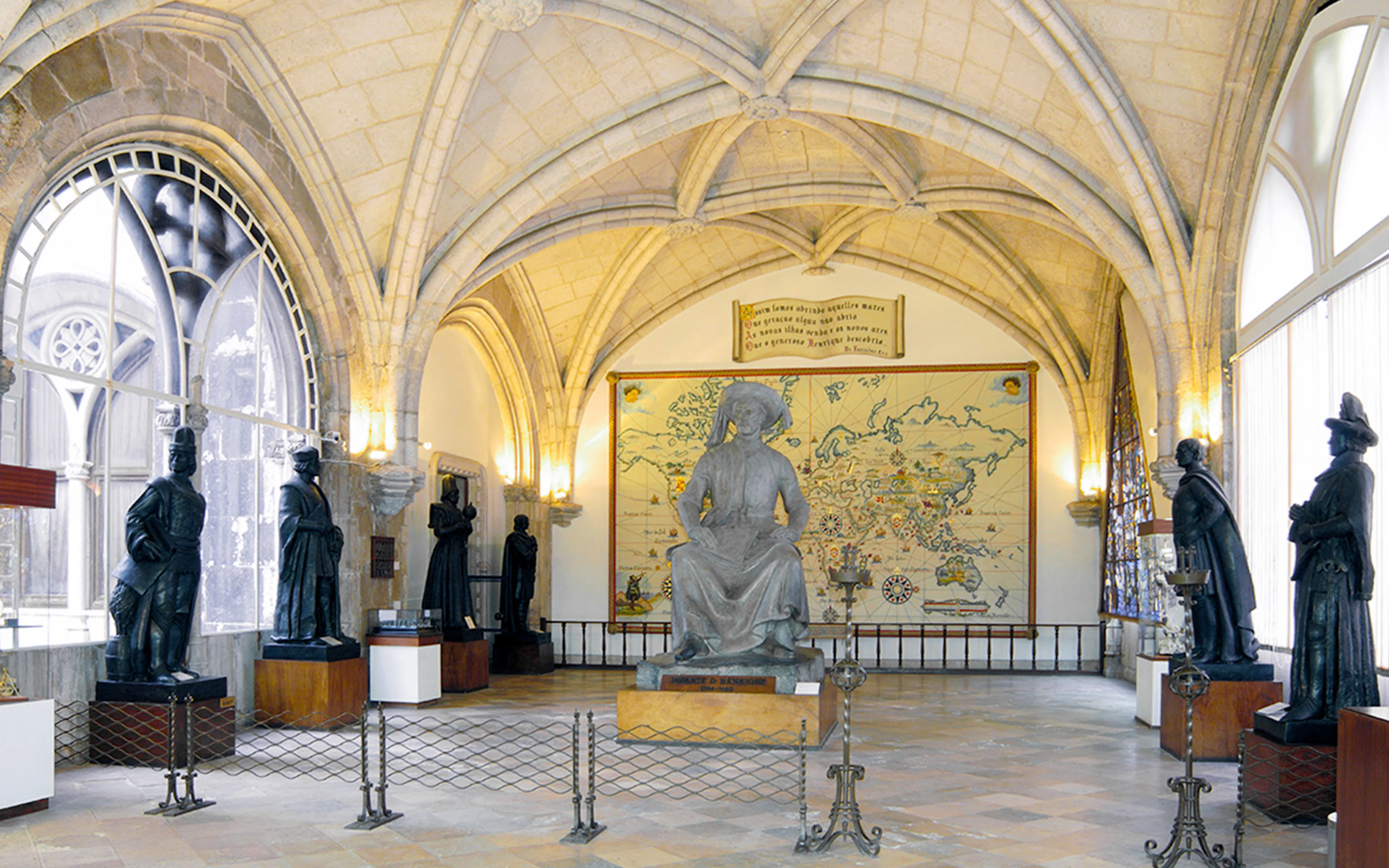
Prince Henry gallery

Start with the monumental figure of Prince Henry the Navigator and the introductory displays. This room frames the museum’s central question: how a small Atlantic kingdom turned seafaring into state identity.

Model ship circuit

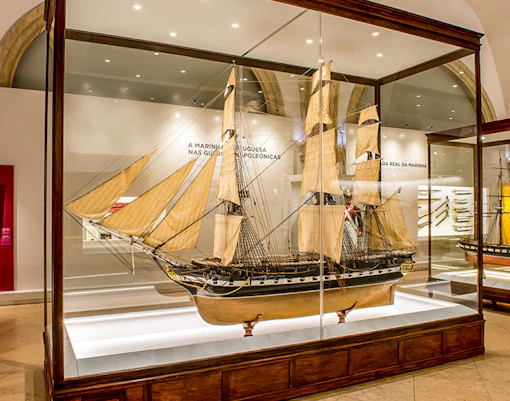
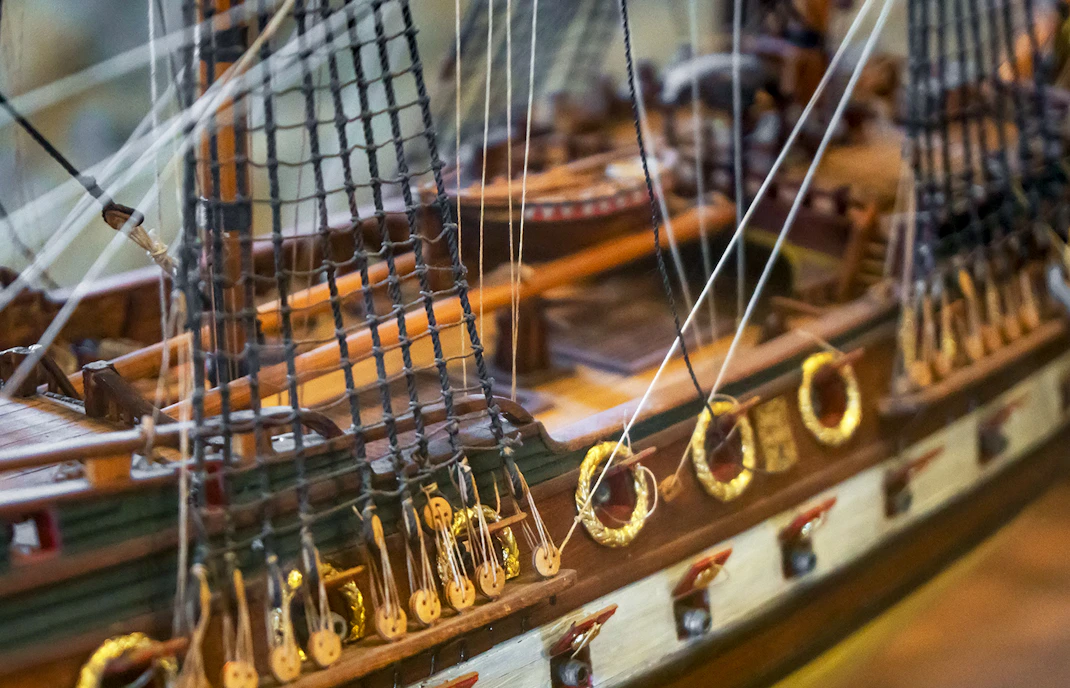
This is where many visitors slow down. Hundreds of scale vessels trace the jump from caravels to heavier ocean-going ships, and the craftsmanship rewards close looking rather than a rushed pass-through.

Nautical instruments and globes

Astrolabes, charts, and historic globes show the technical side of exploration. If you want the museum’s intellectual core, spend time here; it makes the rest of Belém feel far less symbolic and far more real.

Archangel Raphael

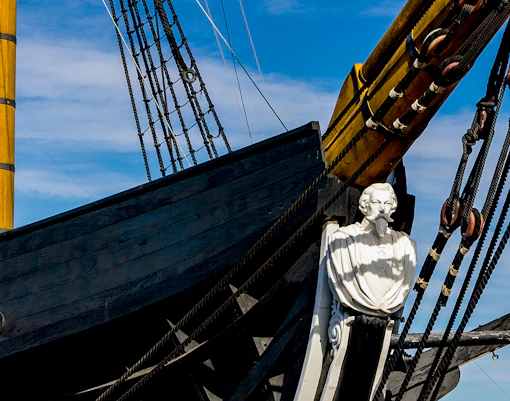
The carved figure carried on Vasco da Gama’s 1497 voyage to India is one of the museum’s most resonant objects. It compresses religion, risk, and imperial ambition into a single surviving artifact.

Royal cabin room

Reconstructed cabins from the royal yacht Amélia shift the mood from navigation to ceremony. Porcelain, silver, and crystal make clear that Portugal’s naval story also included display, hierarchy, and court life.

Far East room

Japanese armor and Asian porcelain reveal what maritime routes brought back to Lisbon. It’s a useful corrective to thinking of the museum as only ships and sailors; trade and cultural exchange are part of the story.

Royal barge of Maria I

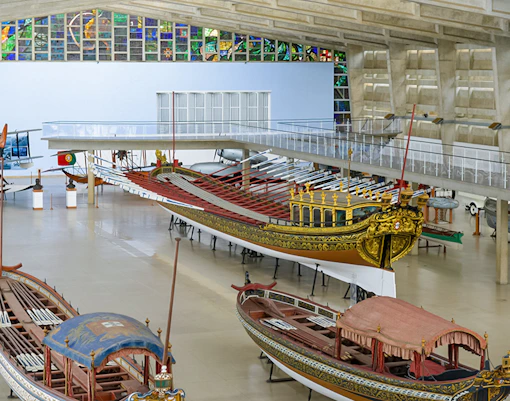
Many visitors think the museum is over before they reach this hall. Don’t stop early: this gilded 1780 royal barge is the showpiece, and the vast pavilion gives it the scale it needs.

Working craft and seaplanes

Tagus boats, fishing vessels, and the Santa Cruz seaplane widen the story beyond the Age of Discovery. This section is usually less crowded and shows how Portuguese maritime identity continued into the 20th century.

How to explore the Maritime Museum of Lisbon?

Visit duration and route

Budget 45 minutes to 1.5 hours. You’ll finish closer to 45 minutes if you move briskly through the monastery-wing galleries and treat the museum as a Belém add-on. You’ll need nearer 90 minutes if you read the navigation displays properly and spend time in the Galliot Pavilion with the royal barges and aircraft.

Start in the historic west-wing galleries and follow the museum’s natural chronology: Prince Henry, ship models, navigational instruments, royal rooms, and Far East collections. After that, keep going until you reach the large vessel hall. Many first-timers stop too early and miss the museum’s most dramatic space.
Key features and additional sections

Self-paced visits work well because the route is calm and fairly linear. Guided visits add value if you want help reading the colonial, technical, and ceremonial layers that the signage can only introduce briefly.

  • Must-see: the model ship circuit, navigation instruments, the Archangel Raphael, and the Royal Barge of Maria I.
  • Optional: the working-craft and seaplane section, which adds around 20 minutes and broadens the story into modern maritime life.

Brief history of the Maritime Museum of Lisbon

  • 1501: Construction begins on Jerónimos Monastery, the Manueline complex whose west wing would later house the museum.
  • 1863: King Luís I establishes the Maritime Museum to preserve Portugal’s naval heritage, including charts, models, instruments, and objects linked to seafaring life.
  • 20th century: The collection is installed in Belém, placing it in a district already strongly associated with Portugal’s maritime expansion.
  • 1960s: The museum opens to the public in its present Jerónimos Monastery location.
  • Late 20th century: The Galliot Pavilion expands the display space, allowing royal barges, working craft, and aircraft to be shown at full scale.
  • Today: More than 20,000 objects trace Portuguese navigation, naval history, traditional craft, royal ceremony, and maritime activity from the Age of Discovery to the modern era.

Who built and shaped the Maritime Museum of Lisbon?

The Maritime Museum was founded by King Luís I in 1863, a monarch with a strong interest in naval history, and later developed under the Portuguese Navy as a national collection of naval memory. Its creation focused on preservation rather than spectacle, bringing together charts, models, instruments, and ceremonial vessels before Portugal’s maritime record could disperse into private collections and storehouses. Its setting belongs to the Jerónimos Monastery complex, while its curatorial identity reflects Portugal’s long relationship with navigation, naval power, and maritime trade.

Architecture of the Maritime Museum of Lisbon

Style and materials

The museum’s historic rooms belong to the Manueline Gothic world of Jerónimos Monastery, though the museum itself is not a single-purpose monument. Pale limestone vaults, carved columns, dark timber ship models, glass cases, and gilded barge decoration create a sharp contrast between monastic restraint and naval pageantry, giving even small maritime objects a ceremonial weight.

Structure

The visit works through scale changes: narrow, linear historic rooms for models, charts, and instruments, followed by the vast Galliot Pavilion for full-size barges, working craft, and aircraft.

On the ground

You feel the architecture physically. First, you lean in toward miniature caravels and navigation tools; later, you step back to take in ceremonial barges built for dozens of oarsmen.

Architects

The historic monastery complex is associated with architects such as Diogo de Boitaca and João de Castilho. The latter pavilion is more functional, designed to give oversized maritime objects the space they need.

Why the Maritime Museum matters in Belém

Most visitors come to Belém for two symbols: Jerónimos Monastery and Belém Tower. The Maritime Museum gives those monuments their working vocabulary. Caravels, astrolabes, globes, royal barges, ocean routes, and naval ritual turn Belém from a set of landmarks into a connected story. It is also usually calmer than the district’s headline sights, making it a useful pause on crowded afternoons.

Frequently asked questions about the Maritime Museum of Lisbon

Yes, especially if Belém’s headline monuments feel overcrowded. The museum gives you the story behind the district in a calmer setting and pairs well with Jerónimos Monastery.