Plan your visit to Royal Treasure Museum
The Royal Treasure Museum is a compact but detail-rich museum best known for Portugal’s Crown Jewels, royal regalia, and one extraordinary silver banquet service. Even though the route is contained to three levels, it rewards slower looking more than most visitors expect, especially once you reach the orders, diplomatic gifts, and silver galleries. The biggest difference between a rushed visit and a good one is timing your arrival around security and giving yourself enough room to linger. This guide covers tickets, timing, entrances, and what to prioritize.
Quick overview: Royal Treasure Museum at a glance
This is an easy museum to fit into a half-day, but it works best if you plan it around Ajuda and Belém rather than treating it as a drop-in stop.
- When to visit: Tuesday–Sunday, 10am–7pm. The first hour after opening on Tuesday to Thursday is noticeably calmer than late morning to early afternoon, because many visitors come uphill after Jerónimos Monastery or pair it with Ajuda Palace.
- Getting in: From €11 for standard entry. Skip-the-line entry from about €13 online. You can buy on the day, but summer late mornings are smoother if you book ahead and arrive with a digital ticket ready.
- How long to allow: 1–1.5 hours for most visitors. It stretches closer to 2 hours if you stop to read the gallery text and spend time with the silver service and royal orders.
- What most people miss: The Golden Roses, the orders and decorations gallery, and the Germain silver dinner service are easy to rush past even though they add most of the historical texture.
- Is a guide worth it? Yes if you want the stories behind the symbols and diplomatic gifts; otherwise, the bilingual panels are strong enough for a good self-guided visit.
Jump to what you need
🕒 Where and when to go
🗓️ How much time do you need?
🗺️ Getting around
👑 What to see
♿ Facilities and accessibility
🍽️ Eat, shop, and do more
Where and when to go
How do you get to the Royal Treasure Museum?
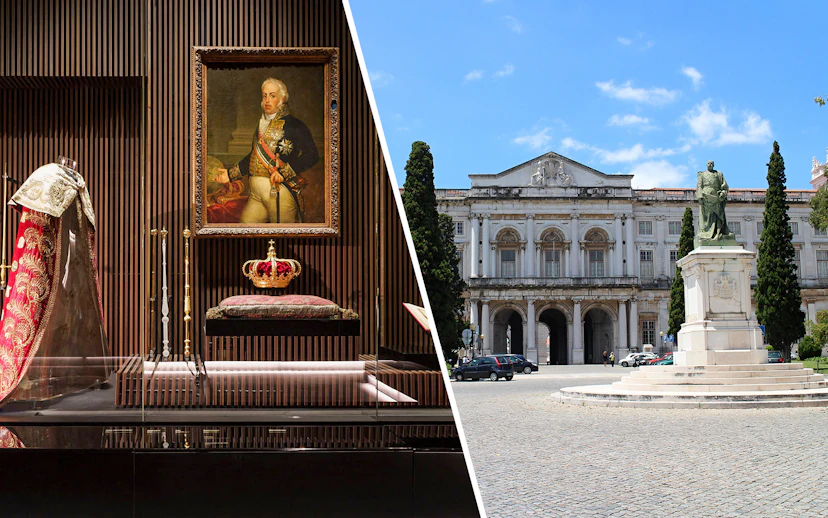
The museum sits in Ajuda, above Belém, inside the west wing of Ajuda National Palace, and about 5–6km from central Lisbon.
Largo da Ajuda, 1349-021 Lisbon, Portugal
- Bus: Lines 760, 732, 742, and 729 → Ajuda Palace / Largo da Ajuda → closest and easiest drop-off for the entrance.
- Tram + bus: Tram 15E to Belém → connect uphill by bus → smarter than walking if you’ve already been sightseeing in Belém.
- Train + bus: Cascais line to Belém → short bus ride uphill → good if you’re coming from Cais do Sodré.
- Taxi/rideshare: Drop-off at Ajuda Palace entrance → easiest option from downtown → usually 15–20 min depending on traffic.
Which entrance should you use?
There is one dedicated museum entrance in the west wing of Ajuda National Palace, and the main thing visitors get wrong is assuming they can walk in with bags and breeze through security.
- Main entrance: Located at the Royal Treasure Museum entrance in Ajuda Palace’s west wing. Expect a 5–15 min wait during late mornings in summer because lockers and metal detectors slow entry.
When is the Royal Treasure Museum open?
- Tuesday–Sunday: 10am–7pm
- Monday: Closed
- Last entry: 6pm
When is it busiest? Late morning to about 2pm from May to September is busiest, especially when visitors combine Belém monuments with Ajuda and arrive in tour-wave clusters.
When should you actually go? Tuesday to Thursday right after opening gives you the clearest views of the Crown Jewels and quieter silver galleries before combo visitors drift uphill from Belém.
How much time do you need?
| Visit type | Route | Duration | Walking distance | What you get |
|---|---|---|---|---|
Highlights only | Grand entrance and building overview → crown jewels gallery → royal artifacts display → exit | 45 minutes | 0.4 km | See the museum's most iconic pieces and iconic spaces. Fast-paced visit focusing on the greatest treasures without deep exploration. |
Balanced visit | Building tour and orientation → crown jewels → royal regalia → precious collections → gift shop | 1.5–2 hours | 0.7 km | A well-rounded exploration of the royal treasures and the building's architecture. Enough time to read labels and appreciate the displays without rushing. |
Full exploration | Exterior and palace grounds → building interiors → crown jewels → royal regalia → precious stones and metalwork → royal manuscripts → museum cafe and shop | 3+ hours | 1.2 km | Complete immersion in royal history. Time to study exhibits closely, use an audio guide, examine craftsmanship details, and fully engage with every collection across all levels. |
How do you get around Royal Treasure Museum?
Gallery layout and suggested route
The museum is compact and vertical, with 11 themed rooms spread across 3 levels inside a purpose-built vault. It’s easy to self-navigate, but the route rewards patience because the quieter galleries near the end contain some of the most memorable objects.
- Lower level: Gold and diamonds from Brazil and the origins of the treasury → budget 20–25 min.
- Middle level: Crown Jewels, regalia, and orders of merit → budget 25–35 min.
- Upper level: Diplomatic gifts, royal silverware, and the Germain service → budget 20–30 min.
Suggested route: Start at the beginning and follow the sequence without skipping ahead, because the raw gold and diamonds make the crown rooms land better later. Most visitors slow down too much at the regalia, then rush the final silver galleries even though the Germain service is one of the museum’s strongest rooms.
Maps and navigation tools
- Map: The route is largely linear across 3 levels, so most visitors won’t need a separate floor plan once inside.
- Signage: Wayfinding is clear inside the museum, but the approach from Belém and the palace complex can feel less obvious than the galleries themselves.
- Audio guide/app: There isn’t a standard museum audio-guide device, so bilingual gallery text does most of the work for self-guided visits.
💡 Pro tip: Don’t treat the top floor as the exit sprint, that’s where the silver service and diplomatic gifts are, and they’re easier to enjoy once the early crown-jewel crowd thins out.
Where are the masterpieces inside Royal Treasure Museum?

Gold and diamonds from Brazil
Attribute — Era: 18th-century imperial wealth source
This opening gallery shows the raw gold and uncut diamonds that funded Portugal’s royal splendor, which makes it more important than many visitors realize. It’s the context room for everything that follows, not just a prelude. Most people rush past the rough stones to get to the crown displays, but this is where you understand how the treasury was built in the first place.
Where to find it: At the start of the visit on the first part of the museum route.
The Royal Crown and regalia
Attribute — Type: Ceremonial royal insignia
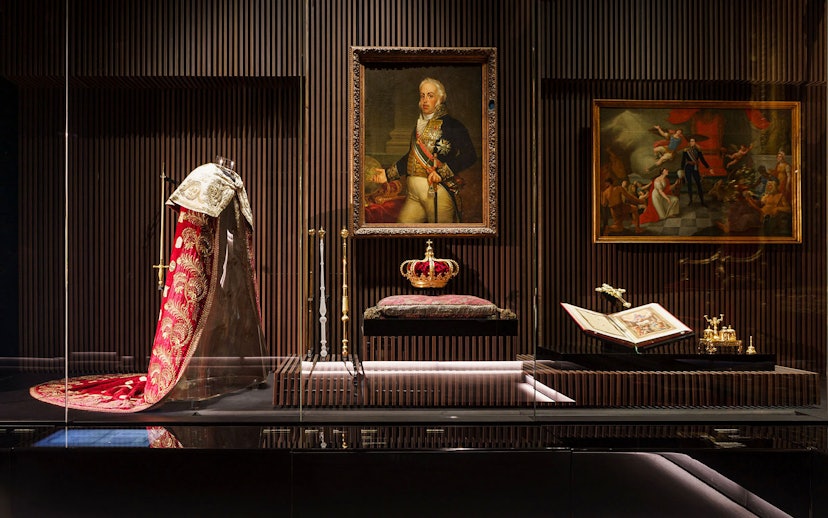
This is the emotional high point for many visitors: the Crown of Portugal, scepters, ceremonial objects, and the surviving crimson mantles of monarchy gathered in one place. The craftsmanship is obvious, but the scale and weight of the pieces land best in person. Most visitors focus on the crown alone and miss the embroidery and textile detail in the mantles beside it.
Where to find it: In the central regalia galleries on the middle level.
Orders and decorations of the kingdom
Attribute — Type: Chivalric and state honors
This gallery is easy to underestimate until you stop and look closely at the enamel, ribbons, jeweled crosses, and diplomatic symbolism. It adds the political story behind the jewels, not just the sparkle. Many visitors give it only a quick pass, but the labels here explain Portugal’s court culture better than almost anywhere else in the museum.
Where to find it: Near the crown and regalia displays on the middle level.
The Golden Roses
Attribute — Type: Papal diplomatic gifts
These rare gold ornaments were gifted by the Pope and tell a more intimate diplomatic story than the larger ceremonial objects around them. They’re delicate, intricate, and far easier to overlook than the crown cases. Most people miss them because they appear later in the route, when attention starts drifting toward the exit.
Where to find it: In the diplomatic gifts section toward the later part of the museum route.
Crown silverware
Attribute — Type: Royal table service
The royal silver collection gives you a different kind of extravagance: not coronation theater, but everyday court luxury at its highest level. Platters, vessels, and formal table pieces make royal life feel concrete rather than abstract. What many visitors miss is how much of this survived destruction, storage, and centuries of political change to be shown here at all.
Where to find it: In the upper galleries, after the regalia-focused rooms.
The Germain silver dinner service
Attribute — Creator: François-Thomas Germain
This is one of the museum’s real closers: a vast 18th-century silver banquet service displayed almost like a stage set. It’s striking from a distance, but the sculpted handles, coat-of-arms details, and sheer completeness are what make it special. Many visitors admire the overall spectacle and leave without stepping closer, which is where the craftsmanship really pays off.
Where to find it: In its own major gallery near the end of the visit on the upper level.
Facilities and accessibility
- 🎒 Lockers: Free lockers are available at the entrance, and you’ll need them because bags and backpacks aren’t allowed into the galleries.
- 🚻 Restrooms: Restrooms are on-site, including accessible restrooms, so you don’t need to leave the building mid-visit.
- 🍽️ Café: There’s a small café and lounge on the top floor, which works best for a coffee or short break rather than a full meal.
- 🛍️ Gift shop: A boutique near the end of the visit is worth a look if you want a museum-specific souvenir before leaving.
- 🪑 Seating: The top-floor lounge is the easiest place to sit and reset after the galleries.
- 📶 Wi-Fi: Free Wi-Fi is available inside the museum.
- ♿ Mobility: The museum is wheelchair accessible, with elevators connecting the 3 levels and wide gallery paths through the vault.
- 🧠 Cognitive and sensory needs: Weekday mornings are the calmest time to visit, while the entrance screening area is the loudest and most stop-start part of the experience.
- 👨👩👧 Families and strollers: Elevators and modern circulation make the main route stroller-friendly, and the compact layout is manageable without constant backtracking.
The museum works best for school-age children who like crowns, treasure, and visually dramatic objects more than long text-heavy history museums.
- 🕐 Time: Around 45–60 minutes is realistic with younger children, and the Crown Jewels and silver galleries are the best sections to prioritize.
- 🏠 Facilities: Lockers, restrooms, elevators, and a top-floor café make short family visits easier to manage.
- 💡 Engagement: Start by asking children to spot the biggest diamond, the brightest medal, or the most over-the-top banquet object so the route feels like a treasure hunt.
- 🎒 Logistics: Bring as little as possible, because bags slow you down at security and have to go into lockers before entry.
- 📍 After your visit: Ajuda National Palace right next door is the easiest follow-up if your child still has energy and wants more royal rooms to explore.
Rules and restrictions
What you need to know before you go
- Entry requirement: A valid ticket or Lisboa Card is required, and reduced tickets may be checked against ID at the entrance.
- Bag policy: Bags, backpacks, and large purses must be stored in the free lockers before you enter the galleries.
- Re-entry policy: Re-entry is not allowed once you leave, so don’t step out for food or a break unless you’re done with the visit.
Not allowed
- 🚫 Food and drink: Food and drinks aren’t allowed in the galleries, so finish water and snacks before security.
- 🚬 Smoking and vaping: Smoking and vaping aren’t allowed inside the museum building.
- 🐾 Pets: Pets aren’t allowed inside, though service animals should still be accommodated.
- 🖐️ Touching exhibits: Touching cases or objects isn’t allowed, which matters here because many displays are irreplaceable royal artifacts.
Photography
- Photography is allowed throughout the museum, and this is one of the easier Lisbon museums for taking pictures of the displays.
- Flash photography should be avoided, and tripods or bulky photo gear are a poor fit for the tight security process and glass-fronted galleries.
- If you’re photographing the crown and regalia, the best results usually come from stepping slightly off-center to reduce reflections.
Good to know
- Security screening: Entry feels more like an airport than a typical museum, so even small items can slow the line if you arrive overloaded.
- Route planning: The museum is compact, but the final silver and diplomatic galleries are the sections most often cut short by visitors who think the main highlight is already behind them.
Practical tips
- Booking and arrival: Book ahead for summer late mornings, even if the museum rarely sells out completely, because arriving with a digital ticket saves you from sorting payment while everyone else is still moving through security.
- Security matters more than the queue: The slow part here is often the screening and locker process, not the turnstile itself, so a small bag or no bag will get you inside faster.
- Pace the visit from the back as well as the front: Don’t spend your whole time budget on the crown and mantle displays; keep at least 20 minutes for the upper-floor silver galleries, which many people remember best afterward.
- Use the location smartly: Pair the museum with Ajuda National Palace if you want a royal-history half-day, or slot it after Belém only if you’re happy with the uphill transfer and a slower afternoon rhythm.
- Time your photos: Tuesday to Thursday, right after opening or after 4pm, is best if you want cleaner photos of the regalia without people constantly stopping in front of the cases.
- Eat after, not before, if you’re combining sights: The top-floor café is fine for a short break, but Belém has better food options if you’re heading downhill afterward, especially if you want to end with pastries instead of starting with a heavy lunch.
- Families should keep the mission simple: With children, frame this as a treasure visit rather than a full historical deep dive, then leave once attention drops instead of forcing every room.
What else is worth visiting nearby?
Commonly paired: Ajuda National Palace
Distance: Next door — 2 min walk
Why people combine them: It’s the most natural pairing in the area because the museum explains the objects of the monarchy, while the palace shows the rooms and ceremonial setting they belonged to.
the
Commonly paired: Jerónimos Monastery
Distance: 2km — 10 min by bus or about 20–25 min downhill on foot
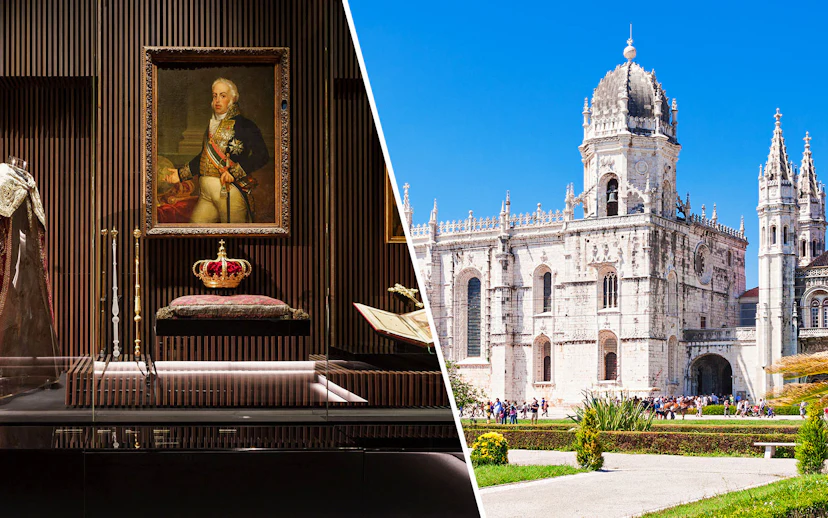
Why people combine them: It rounds out a royal-and-imperial Lisbon half-day, especially if you want one indoor museum visit and one landmark-scale monument in the same district.
Also nearby
National Coach Museum
Distance: 1.5km — 15 min walk downhill or about 5 min by bus
Worth knowing: This is the best nearby add-on if you want to keep the royal theme going without committing to another long visit.
Belém Tower
Distance: 3km — about 15 min by bus or a short taxi ride
Worth knowing: It’s less naturally paired on foot, but it works well if you’re building a wider Belém day and want a riverside finish after indoor museum time.
Eat, shop and stay near Royal Treasure Museum
- On-site: The museum’s small top-floor café is good for coffee and a short reset, but it’s more of a convenience stop than a destination meal.
- Pastéis de Belém (20-min walk downhill, Rua de Belém 84–92): Go here after your visit if you want Lisbon’s most famous custard tart and an easy Belém stop that fits naturally into the rest of the day.
- Belém cafés near Jerónimos Monastery (10-min bus ride, Belém): Better than staying uphill if you want more choice or a proper sit-down lunch after the museum.
- Ajuda neighborhood cafés (short walk from the palace area, Ajuda): Handy if you want something quieter and don’t feel like heading back into the main Belém flow.
- 💡 Pro tip: If you’re visiting both the museum and Ajuda Palace, eat after both rather than between them — once you leave the museum, you can’t re-enter on the same ticket.
- Royal Treasure Museum boutique: The best place for a quick souvenir tied directly to the collection, especially books and small museum keepsakes near the exit.
- Pastéis de Belém takeaway counter: A good edible souvenir stop if you’re already heading downhill toward Belém after the visit.
Ajuda is convenient if your trip is built around Belém museums, quieter streets, and fewer nightly logistics. It’s not the best first-time base for Lisbon if you want to walk everywhere after dinner or stay out late, because the hill and transport connections make it feel more residential than central.
- Price point: Mostly midrange stays with fewer choices than central Lisbon, though the quieter setting can feel better value if Belém is a priority.
- Best for: Visitors planning a museum-heavy west-Lisbon stay who want Ajuda Palace, Belém, and the riverfront within easy reach.
- Consider instead: Belém works better if you want flatter walking and more landmark density, while Baixa and Chiado are stronger bases for longer stays that mix sightseeing, dining, and evening plans.
Frequently asked questions about visiting Royal Treasure Museum
Most visits take 1–1.5 hours. If you read the gallery text carefully, photograph the regalia, and spend time in the silver galleries at the end, 2 hours is more realistic. Visitors who move quickly can finish in under an hour, but that usually means rushing the orders, diplomatic gifts, or banquet silver.
No, you don’t always need to book far ahead, but booking online is still the smoother choice. This museum often has same-day availability, yet summer late mornings are easier with a digital ticket already on your phone. It also saves time at entry, which matters because security is stricter than at most Lisbon museums.
Yes, especially if you’re visiting in summer or fitting the museum into a tight Ajuda and Belém itinerary. The biggest time saver is not always the ticket desk itself, but arriving with entry sorted before the locker and security process starts. If you go early on a weekday, standard entry is usually still manageable.
Arrive about 10–15 minutes early. That gives you enough time for lockers, bag checks, and the metal detector without feeling rushed at the threshold. If you’re carrying extra items or visiting at peak late-morning hours, give yourself closer to 20 minutes.
Yes, as long as you treat it as a short treasure-focused visit rather than a full history lesson. Most families do best in 45–60 minutes, concentrating on the Crown Jewels, medals, and silver service. The layout is compact, elevators help with strollers, and the objects are visually strong enough to hold attention better than text-heavy museums.
Yes, the museum is wheelchair accessible. Elevators connect all 3 levels, pathways are modern and wide, and accessible restrooms are available on-site. The main limitation is getting to Ajuda itself if you’re coming from Belém on foot, since the uphill approach is steep and public transport or taxi is much easier.
Yes, but the on-site option is best for a short break, not a full meal. There’s a small café and lounge inside, and stronger food options are downhill in Belém. If you’re planning lunch, it usually makes more sense to eat after the museum rather than leave mid-visit and lose your one-time entry.
It’s physically part of the Ajuda Palace complex, but it’s a separate museum visit. That’s why many travelers pair them back to back: the museum gives you the jewels, regalia, and ceremonial objects, while the palace gives you the furnished royal rooms that complete the story.