Quick Information

RECOMMENDED DURATION

2 hours

VISITORS PER YEAR

377780

EXPECTED WAIT TIME - STANDARD

1-2 hours (Peak), 30-60 mins (Off Peak)

EXPECTED WAIT TIME - SKIP THE LINE

0-30 mins (Peak), 0-30 mins (Off Peak)

UNESCO YEAR

1983

Plan your visit

Did you know?

During the reign of King John II, there used to be a line of defence in place in the exact location where the tower is at. Later, his successor, King Manuel I believed that building a permanent tower would be more viable than having a ship on the water. This is how the construction of the Belem Tower commenced. The ship has multiple canons and this structure was replaced with a stone fortification

A fascinating Belem Tower fact is that it was constructed on a small outcrop of the Tagus River. Due to an earthquake that took place in 1755, the location of the Belem Tower shifted. The course of the river gradually moved due to the destruction and the small island got closer to the land, thus merging the two over time and making it all the more impressive. Today, the iconic structure just appea

In the year 1514, plans were in place to construct a tower, and the famous military architect Francisco de Arruda would lead the job. He was an experienced architect as he had built a lot of fortresses in North Africa earlier and was the right fit for the work. He was referred to as the ‘Master of the works of the Belem stronghold’ by the King himself and had managed to finish the tower in about 5

More insights

Is the Belém Tower worth visiting?

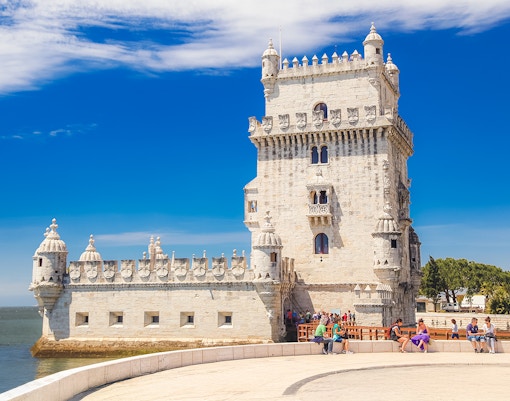
You reach Belém Tower over a short bridge, with gulls overhead, the Tagus glinting on both sides, and pale limestone catching the light. Up close, it feels less like a museum piece and more like a ship-shaped outpost set loose at the river’s edge, all carved ropes, domes, and watchtowers.

It was built to guard Lisbon’s harbor and to stage-manage Portugal’s seafaring ambition. This was both fortress and symbol, the point where imperial power, religious confidence, and ocean-bound risk met the river.

The payoff is the strange intimacy of standing inside a monument that once watched fleets leave for unknown coasts, then climbing into the wind and wide water views. You don’t just learn about the Age of Discoveries here; you feel how close Lisbon always was to departure.

Skip it if: narrow spiral stairs, queues, or small rooms will frustrate you more than river views and carved stone details.

What to see inside Belém Tower?

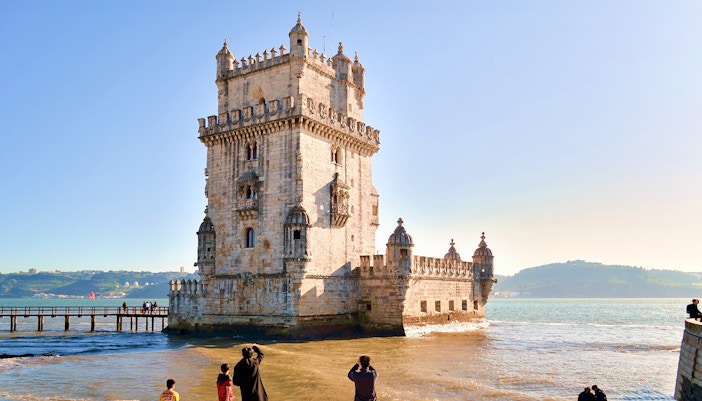
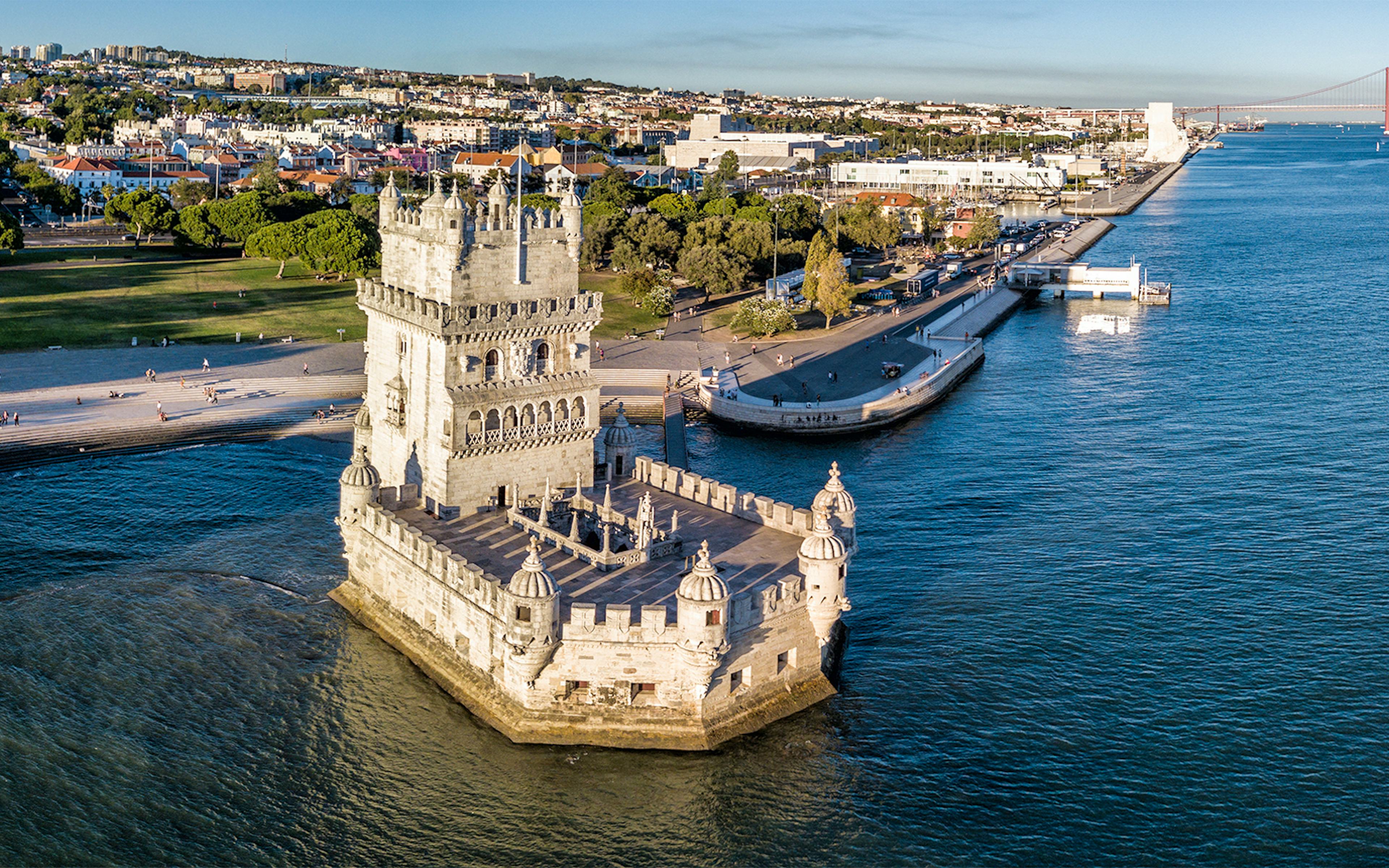
Belem Tower in Lisbon, Portugal, surrounded by the Tagus River, viewed from above.
1/5

The river-facing façade

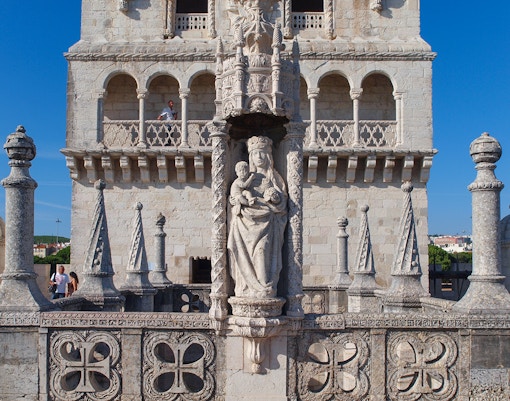
Start outside, where Belém Tower makes its first impression: carved ropes, armillary spheres, shield motifs, and the rhinoceros gargoyle. This is the best place to understand how decorative its military architecture really is.

The bastion terrace

The low hexagonal bastion once held heavy artillery guarding the Tagus. Walk the open gun deck first for close river views, the tower’s full silhouette above you, and the clearest sense of its original defensive job.

Governor’s Hall

The first interior chamber feels austere after the ornate exterior. It introduces the tower’s working life and sets up the upward climb through rooms that were practical first, ceremonial second.

The King’s Hall and chapel

These upper rooms are small but atmospheric, with a river-facing loggia and a vaulted chapel. They’re easy to rush through, yet they explain how this fort also functioned as a symbolic royal gateway.

The rooftop terrace

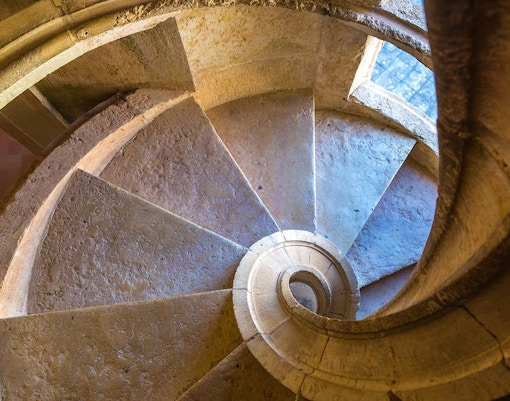
The narrow spiral staircase leads to the payoff: open views over the Tagus, the 25 de Abril Bridge, and Belém’s riverside monuments. Capacity inside is limited, so earlier visits usually feel calmer.

How to explore the Belém Tower

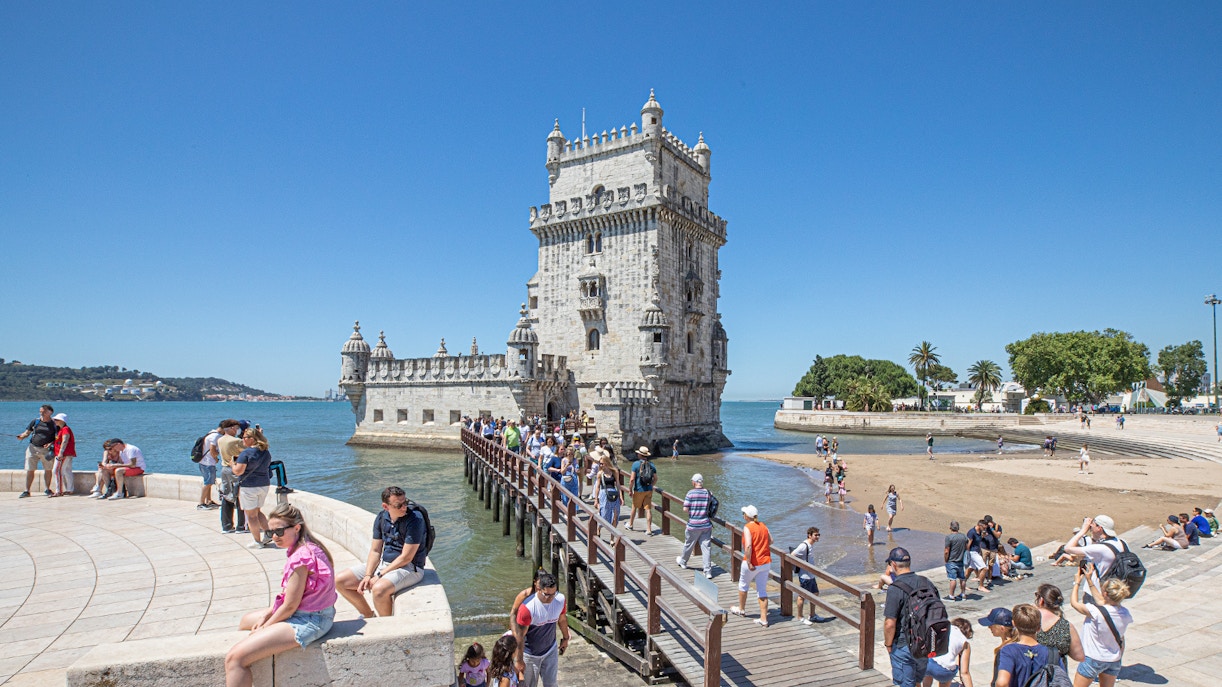
Visitors walking on a bridge to Belém Tower in Lisbon, Portugal.

Start outside on the riverbank before entering; the façade, bartizans, and rhino gargoyle make more sense when seen from ground level. Then cross the bridge to the bastion, work through the interior rooms in order, and save the rooftop terrace for last so the views feel like a payoff rather than a first glance.

  • Must-see: the bastion terrace, the King’s Hall loggia, and the rooftop panorama.
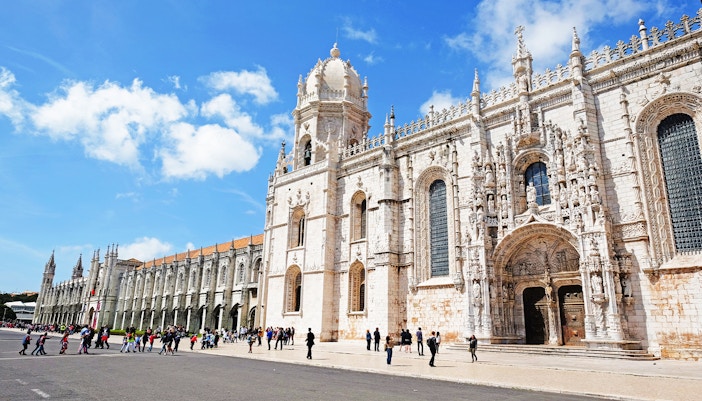
  • Optional: a walk to the Monument to the Discoveries or Jerónimos Monastery, which adds 20–60 minutes depending on whether you’re only photographing or fully visiting.
  • Guided vs. self-paced: self-paced is manageable, but an audio guide makes the tower’s military design and Manueline symbolism far easier to read.
Budget 45 minutes to 1.5 hours for Belém Tower itself. Closer to 1.5 hours is realistic if there’s a queue, you pause for exterior photos, or you wait your turn on the spiral staircase.
Brief history of the Belém Tower

  • 1514: King Manuel I commissions Francisco de Arruda to build a fortified tower at Belém, protecting Lisbon’s harbor and marking the river approach to the capital.
  • 1519: Construction is completed, and the tower begins service as part of the Tagus defense system during Portugal’s maritime high point.
  • 1580: During the Iberian Union, the fort passes under Spanish Habsburg control and continues in military use.
  • 17th to 19th centuries: Its role shifts over time from defensive outpost to customs post and prison.
  • 1983: UNESCO lists Belém Tower and Jerónimos Monastery together for their architectural and historical importance.
  • Today: The tower stands as one of Lisbon’s defining landmarks and a lasting symbol of the Age of Discoveries.

Read the full history of Belém Tower →

Who built it?

Belém Tower was commissioned by King Manuel I and designed by Francisco de Arruda, an architect and military engineer shaped by work in Portuguese North Africa. That background helps explain the tower’s fortified logic and Moorish-influenced turrets, even as Manuel I used it to project royal confidence at Lisbon’s harbor.

Architecture of the Belém Tower

Style

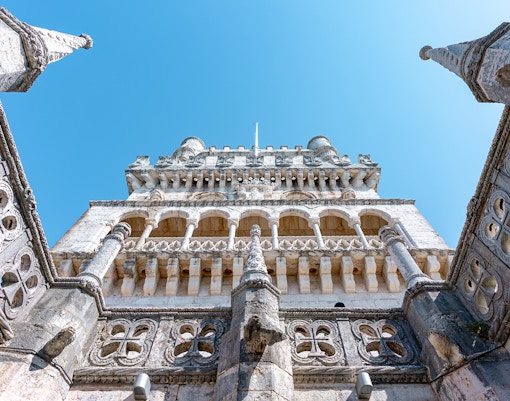
Manueline, with Late Gothic structure and maritime ornament that makes the tower feel ceremonial before it feels military.

Stonework

Pale limestone carries the tower’s ropes, shields, knots, and carved details clearly in Lisbon’s strong river light.

Engineering

The hexagonal bastion and two-tier artillery design were advanced for their time, letting cannons cover the Tagus approach efficiently.

What you notice

Inside, the tight spiral stair and compact chambers feel defensive; outside, the open terrace releases you back into light and wind.

Frequently asked questions about the Belém Tower

Yes, especially if you want a compact Lisbon landmark with real historical weight. The exterior alone is striking, and the climb adds river views you won’t get from street level. Pair it with Belém by the Riverside: Lisbon e-Bike Tour.

More reads