How to visit Belém Tower: The ultimate planning guide
Belém Tower is a compact 16th-century river fortress best known for its Manueline stonework and its role in Portugal’s Age of Discoveries. The visit itself is short, but it can feel slow because capacity is tight, the spiral staircase is narrow, and midday lines often last longer than the time you spend inside. The biggest difference between a smooth visit and a frustrating one is timing your entry well. This guide covers when to go, how to get in, and what to prioritize once you’re inside.
Everything about Belém Tower ➜Quick overview: Belém Tower at a glance
If you want the short version before you plan the rest of your day, start here.
- When to visit: Tuesday–Sunday, with seasonal hours and last entry typically 4:30pm–5pm depending on the time of year. The first entry window on a weekday is noticeably calmer than 11am–3pm, because the tower only allows around 150 people inside at once and the staircase flow slows everything down.
- Getting in: From €8 for standard entry. Guided visits generally start from about €15. Booking ahead matters most in spring and summer afternoons, while winter visits are usually easier to plan on shorter notice.
- How long to allow: 45–90 minutes for most visitors. Peak-season lines, slow stair traffic, and time spent on the terrace push it toward the longer end.
- What most people miss: The rhinoceros gargoyle on the western façade, the small upper chapel, and the river-facing loggia inside the King’s Hall all get rushed past on the way to the top.
- Is an audio guide worth it? Yes, if you care about the symbolism and history behind the carvings, but for a quick scenic visit, a self-guided route is usually enough.
🎟️ Slots for Belém Tower can sell out 1–2 days in advance during July and August. Lock in your visit before the time you want is gone.
Jump to what you need
🕒 Where and when to go
🗓️ How much time do you need?
🎟️ Which ticket is right for you?
🗺️ Getting around
🏰 What to see
♿ Facilities and accessibility
Where and when to go
How do you get to Belém Tower?
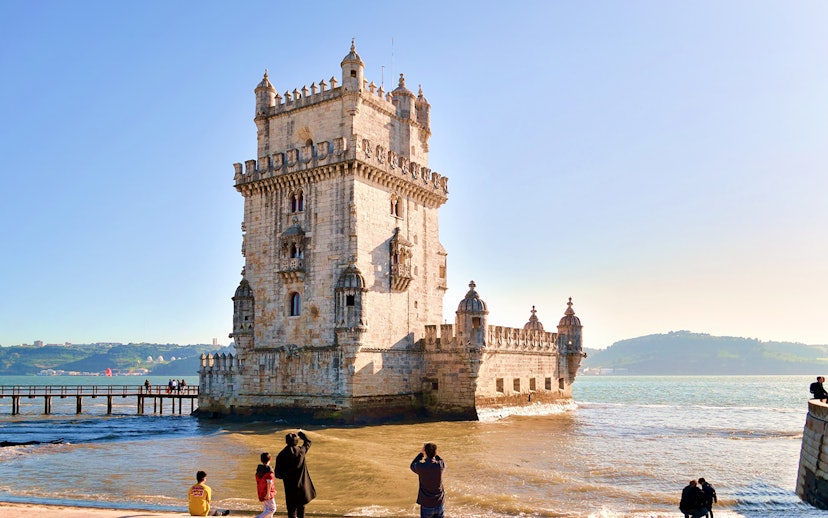
The tower sits on Lisbon’s Belém riverfront, about 5km (3mi) west of the city center, near Jerónimos Monastery and the Monument to the Discoveries.
Av. Brasília, 1400-038 Lisbon, Portugal | → Open in Google Maps
- Tram: 15E → Mosteiro dos Jerónimos stop → 5-min walk → Stay on the river side of Avenida da Índia and continue west.
- Train: Cascais Line → Belém Station → 10-min walk → Cross the gardens toward the waterfront.
- Bus: 727 or 728 → Jerónimos area stop → 5–10 min walk → Best if you’re already moving across central Lisbon.
- Taxi/rideshare: Drop-off near Torre de Belém parking area → 2-min walk → Easiest option if you’re arriving early.
Which entrance should you use?
Belém Tower has one main entrance via the footbridge, but the real bottleneck is the queue type, not the doorway itself. Most visitors lose time by joining the on-site purchase line when the interior is already at capacity.
- Pre-booked tickets: For visitors who already have admission sorted. Expect a 10–20 min wait at quieter times, but longer when the tower is full.
- On-the-day tickets: For visitors buying at the monument. Expect 45–90 min waits on spring and summer afternoons.
When is Belém Tower open?
- Tuesday–Sunday: 10am–5:30pm (October–April)
- Tuesday–Sunday: 10am–6:30pm (May–September)
- Monday: Closed
- Select holidays: Closed on January 1, May 1, Easter Sunday, June 13, and December 25
- Last entry: Usually 4:30pm in winter and 5pm in summer
When is it busiest? Saturdays and Sundays from late morning to mid-afternoon are the slowest, and July–August weekdays can feel just as crowded once tour groups arrive.
When should you actually go? Aim for opening time Tuesday–Thursday, or the last 90 minutes of the day, when the line is shorter and the terrace feels less rushed.
How much time do you need?
| Visit type | Route | Duration | Walking distance | What you get |
|---|---|---|---|---|
Highlights only | Entrance → Exterior viewpoints → Riverside promenade → Exit | 30–45 mins | 0.5 km | Best if you're short on time and mainly want photos of Belém Tower and the Tagus River. You'll see the monument from the outside but won't explore the interior spaces. |
Classic visit | Entrance → Governor's Hall → King's Hall → Chapel → Upper Terrace → Exit | 60–90 mins | 0.8 km | The most popular option. You get to explore the tower's historic rooms, climb to the upper levels, and enjoy panoramic river views while experiencing the monument's key highlights. |
Full exploration | Entrance → All interior levels → Bastion → Upper Terrace → Exterior viewpoints → Riverside promenade → Exit | 90–120 mins | 1–1.5 km | Ideal for history lovers and photographers. You'll have time to appreciate the tower's architecture, defensive features, riverfront setting, and intricate Manueline details without feeling rushed. |
Which Belém Tower ticket is best for you
| Ticket type | What's included | Best for | Price range |
|---|---|---|---|
Standard admission | Belém Tower entry | A short standalone visit where you’re happy to explore at your own pace and can avoid the busiest hours | From €8 |
Online pre-booked admission | Belém Tower entry + advance purchase | A peak-season visit where you want to skip the ticket window, even though capacity control may still mean a short wait | From €8 |
Guided visit | Entry + guide or audio commentary, depending on option | A first visit where the carvings, rooms, and symbolism will feel too sparse without historical context | From €15 |
Lisboa Card | Included entry to Belém Tower through the city pass | A Belém-heavy day where you’re pairing the tower with other included Lisbon sights and want one pass to cover more ground |
How do you get around Belém Tower?
Belém Tower is best explored on foot, and the route is compact enough to cover in 30–45 minutes once you’re inside. The main tower rises above the lower bastion, so the visit naturally builds upward from the river-level gun deck to the terrace.
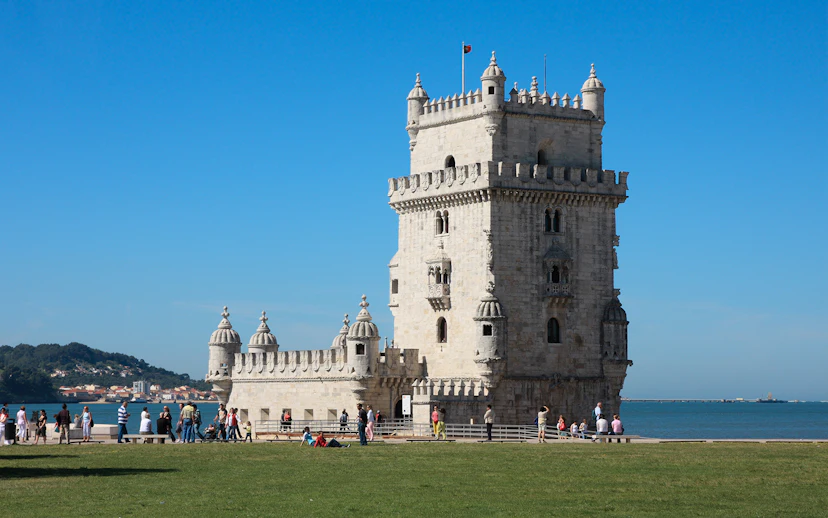
- Exterior riverfront: Best for full-tower photos and Manueline details → 10–15 min if you want the classic façade shot before entering.
- Bastion terrace: Cannons, river views, and the tower’s military base → 10 min to walk the perimeter and orient yourself.
- Interior halls: Governor’s Hall, King’s Hall, and the small chapel → 10–15 min if you pause for the carved ceilings and balconies.
- Upper terrace: Panoramic views over the Tagus, bridge, and Belém waterfront → 10–15 min, especially in softer late-afternoon light.
Suggested route: Do the exterior photos first, then enter, climb steadily to the terrace before the staircase backs up, and slow down on the way back through the interior rooms — most people do the exact opposite and rush the quieter spaces.
Maps and navigation tools
- Map: On-site panels and a simple room sequence guide the visit → download a broader Belém district map before arrival if you’re pairing nearby sights.
- Signage: Wayfinding inside is basic but workable → staff directions matter more than signs because stair traffic is controlled.
- Audio guide / app: Audio or guided commentary adds real value here → the interiors are atmospheric but visually sparse without context.
💡 Pro tip: Do your full exterior walk before joining the line—once you’re inside, the one-way stair flow makes it awkward to go back for missed façade details.
What can you see from Belém Tower?

Rooftop terrace
Feature type: Panoramic viewpoint
The rooftop terrace is the payoff for the climb, with open views over the Tagus, the 25 de Abril Bridge, and the Belém waterfront. Most people rush straight to the river edge, but the better move is to slowly circle the terrace and look back toward the gardens and monastery too.
Where to find it: At the top of the main tower, reached by the spiral staircase above the upper rooms
Rhinoceros gargoyle
Feature type: Manueline carving
This small stone rhinoceros is one of the tower’s most unusual details and one of the easiest to miss. It reflects Portugal’s global reach during the Age of Discoveries, and many visitors never scan the western exterior closely enough to spot it.
Where to find it: On the western façade, high on the exterior near the bastion side
Bastion and cannons
Feature type: Military architecture
The lower bastion explains what the tower actually was before it became a postcard icon: a working river fortress. The wide terrace, cannon positions, and firing angles make more sense than the upper rooms if you want to understand its defensive role.
Where to find it: Immediately after entry, on the river-level terrace surrounding the base
King’s Hall loggia
Feature type: Interior river balcony
The King’s Hall is easy to treat as a pass-through room, but the loggia facing the river is one of the most elegant spaces inside. Visitors often glance out once and move on without noticing the framing arches and the calmer view it gives you away from the rooftop crowd.
Where to find it: On the second main interior level, facing the Tagus
Upper chapel
Feature type: Sacred interior space
The small chapel near the top is quieter than the terrace and gives the visit some welcome contrast after the staircase and crowds. Its vaulted ceiling and carved details are easy to overlook because everyone is focused on reaching the highest viewpoint first.
Where to find it: On the upper interior level below the terrace
Facilities and accessibility
- 🎒 Bags: Travel light because the interior is tight and the narrow spiral staircase is awkward with anything bulky.
- 🚻 Restrooms: Public toilets are available near the monument area, and it’s smarter to use them before joining the entry line.
- 🍽️ Cafés and kiosks: Snack kiosks and casual café options sit in the adjacent park and riverfront area, so you won’t need to detour far for a drink or quick bite.
- 🪑 Seating: The lawns, benches, and riverside park outside are the best rest areas because there is very little room to pause once you’re inside the tower.
- 🅿️ Parking: Limited street parking is available near the tower and gardens, but it fills quickly on weekends and sunny afternoons.
- ♿ Mobility: The riverfront approach and exterior area are flat and manageable, but the interior is not wheelchair accessible because every upper level is reached by a narrow spiral staircase and there is no elevator.
- 👁️ Visual impairments: The visit depends heavily on stone steps, low-light interiors, and architectural details, so a companion or guided explanation makes the experience easier to follow.
- 🧠 Cognitive and sensory needs: The interior can feel cramped and stop-start because staff regulate stair traffic and landings fill quickly, so opening time is the calmest slot.
- 👨👩👧 Families and strollers: Strollers work outside on the riverside path, but they are not practical inside the tower, so a baby carrier is the better choice if you plan to climb.
Belém Tower works well with children who enjoy climbing, cannons, and castle-like spaces, but the visit is short and the queue matters more than the route inside.
- 🕐 Time: Around 30–45 minutes inside is realistic with children, and the bastion plus terrace are usually the parts they enjoy most.
- 🏠 Facilities: The outdoor park area is more family-friendly than the interior, with room to sit, snack, and reset before or after entry.
- 💡 Engagement: Turn the visit into a lookout game by asking children to spot the bridge, the rhino gargoyle, and the cannons before you reach the top.
- 🎒 Logistics: Bring water, sunscreen, and as little gear as possible, and aim for opening time so the staircase feels less stressful.
- 📍 After your visit: Pastéis de Belém is a reliable post-visit stop if you need a quick reward within walking distance.
Rules and restrictions
What you need to know before you go
- Entry requirement: Buy an entry ticket in advance or use a valid Lisboa Card, and keep any reduced-fare proof with you if your ticket depends on age or status.
- Bag policy: Bring only a small bag because the tower’s spiral staircase and tight landings make bulky luggage a bad fit.
- Re-entry policy: Re-entry is not permitted once you exit, so treat your visit as one continuous loop and use restrooms before entering.
Not allowed
- 🚫 Food and drink: Finish snacks and drinks before entering because the interior route is tight and not set up for eating on the move.
- 🚬 Smoking and vaping: Smoking and vaping are not allowed inside the monument.
- 🐾 Pets: Pets are not suitable for the interior climb, and only assistance animals should be considered for the monument approach.
- 🖐️ Touching and climbing: Do not climb on stonework or lean over barriers, because the tower’s historic fabric and narrow edges leave little margin for error.
Photography
Photography is generally allowed for personal use, and Belém Tower is one of Lisbon’s best quick photo stops. The distinction is practical rather than complex: exterior shots, terrace photos, and most interior pictures are fine, but flash is best avoided in enclosed spaces and large tripods or selfie sticks are a poor fit on the staircase and narrow landings. If staff pause movement on the stairs, follow their directions before stopping for photos.
Good to know
- Stair traffic: The spiral staircase works in controlled bursts, so even once you’re inside you may have to pause between levels.
- Visit rhythm: The line after lunch is often longer than the visit itself, which is why early entry changes the experience so much.
Practical tips
- Book around the queue, not the visit: In July and August, the line after lunch can run 45–90 minutes for a visit that only takes 30–45 minutes inside, so the first entry slot saves more time than any route change once you’re in.
- Do the outside first: Walk the full exterior before joining the queue, because the rhino gargoyle, the bastion shape, and the best riverfront photos are much easier to catch from ground level.
- Save your patience for the staircase: The rooms are sparse, but the terrace is worth the climb, so don’t burn your energy on the line by arriving at peak heat and peak crowds around 1pm–3pm.
- Bring less than you think you need: A small bag is noticeably easier on the spiral staircase, while bulky backpacks make the climb slower for you and everyone behind you.
- Eat after, not before: The visit is short enough that it’s smarter to go straight in and save your sit-down break for afterward, especially if you want to walk to Pastéis de Belém without worrying about re-entry.
- Use Belém as a half-day, not a rushed stop: Belém Tower works best when paired with Jerónimos Monastery, the Monument to the Discoveries, or a slower walk along the river rather than squeezed between downtown plans.
What else is worth visiting nearby?
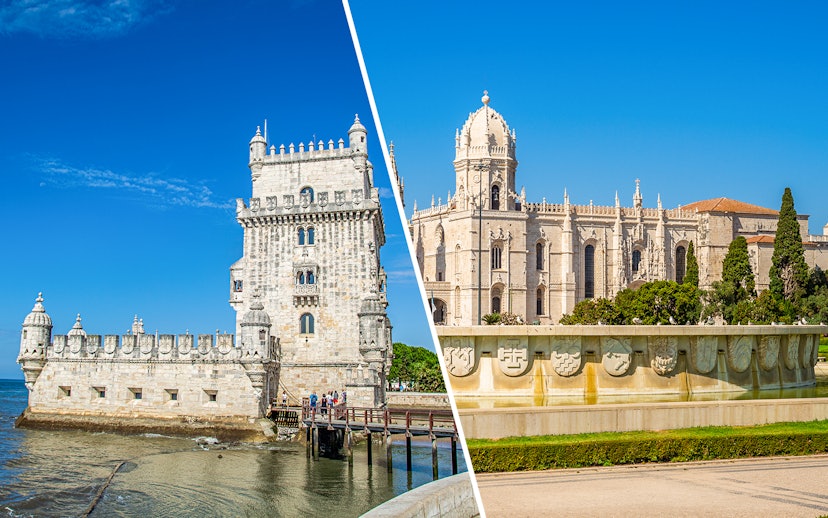
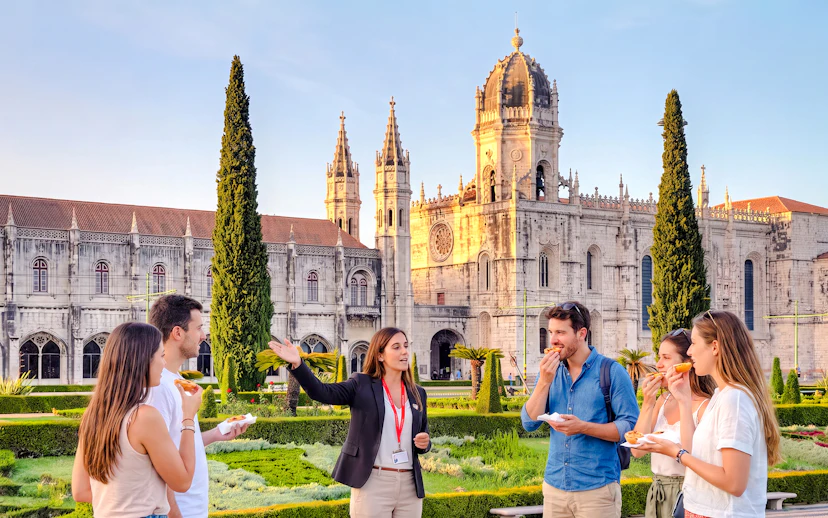
Commonly paired: Jerónimos Monastery
Distance: 700m — 10-min walk
Why people combine them: They tell the same Age of Discoveries story from two different angles, and the short walk between them makes Belém’s UNESCO pair easy to do in one outing.
Commonly paired: Monument to the Discoveries
Distance: 650m — 8-min walk
Why people combine them: It continues the exploration theme and gives you a broader riverfront viewpoint, so the two stops feel complementary rather than repetitive.
Also nearby
Pastéis de Belém
Distance: 950m — 12-min walk
Worth knowing: This is the classic post-visit stop, and it makes more sense after the tower than before because you won’t need to rush your entry line.
Museu de Marinha
Distance: 850m — 11-min walk
Worth knowing: If the tower leaves you wanting more context on ships, navigation, and Portuguese naval history, this is the strongest follow-up in the area.
Eat, shop and stay near Belém Tower
- On-site: Riverfront kiosks and casual cafés near the monument are convenient for coffee, water, or a quick snack, but they work better as a fallback than a destination meal.
- Pastéis de Belém (12-min walk, Rua de Belém): Famous custard tarts, fast-moving service, and the most reliable post-visit reward in the district.
- Praça do Império cafés (10-min walk, Praça do Império): Handy if you want a shaded sit-down break between Jerónimos Monastery and the tower rather than something right on the road.
- Avenida Brasília riverside kiosks (5–8 min walk, waterfront): Best for a drink with a view if you want to stay outdoors and keep the Tagus in sight.
- 💡 Pro tip: Eat after your tower visit, not before — the line is the unpredictable part, and lunch feels much better once you’re done with the staircase.
- Pastéis de Belém takeaway counter: Boxed pastries are the most practical edible souvenir in the area and easier to carry than fragile generic trinkets.
- Belém cultural shops near Praça do Império: The museum-and-monastery stretch is a better place for books, prints, and Portugal-themed gifts than the immediate tower entrance area.
Belém is pleasant, open, and easy to walk around during the day, but it isn’t the best default base for a first Lisbon trip unless you specifically want museums, river views, and quieter evenings. It suits slower itineraries better than nightlife-heavy city breaks, and you’ll trade some central convenience for that calmer feel.
- Price point: The area tends to skew mid-range to upper-mid-range, with fewer bargain stays than more central neighborhoods.
- Best for: Visitors who want a quieter base, easy access to Belém’s monuments, and roomier walks by the river.
- Consider instead: Baixa or Chiado if you want the easiest all-round Lisbon base, or Cais do Sodré if you want better nightlife and faster connections back after dinner.
Frequently asked questions about visiting Belém Tower
Most visits take 30–45 minutes inside the monument itself. In spring and summer, you should budget closer to 1.5–2 hours total because the queue often lasts longer than the climb, especially after lunch and on weekends.
Yes, booking ahead is the safer move in peak season. Belém Tower is small, capacity is limited to roughly 150 people inside at once, and spring and summer afternoons are when on-the-day lines grow longest.
Yes, but only with the right expectations. There is no magic shortcut past the capacity limit, though pre-booking does help you avoid the on-site ticket line and usually makes the whole process smoother on busy days.
Arrive 15–20 minutes early if you’ve booked ahead. That gives you enough time to walk the exterior, cross the footbridge, and be ready when staff begin the next admission cycle without feeling rushed.
Yes, but keep it small. The interior route uses a tight spiral staircase and narrow landings, so bulky backpacks make the climb awkward and slow down the flow for everyone behind you.
Yes, personal photography is generally allowed throughout most of the visit. The best shots are often outside before entry and on the upper terrace, while flash, large tripods, and stopping in the middle of the staircase are poor fits for the space.
Yes, but small groups work better than large ones. The tower is compact, the stair traffic is controlled, and big groups can feel bottlenecked quickly, so guided visits usually run more smoothly when the group size stays manageable.
Yes, especially for children who like cannons, towers, and climbs. The main caution is the queue and the staircase, so families usually have the best visit when they arrive early and keep the stop short and focused.
No, the interior is not wheelchair accessible. The exterior approach and riverside area are manageable, but all upper levels inside the tower are reached by a narrow spiral staircase and there is no elevator.
Yes, food is easy to find nearby even though the monument itself is a short visit. Riverfront kiosks, nearby cafés, and Pastéis de Belém are all within walking distance, so most visitors simply eat before or after their visit.
Yes, Belém Tower is included with the Lisboa Card. You still need to join the entry process and respect the monument’s capacity controls, but the card covers the admission cost.
The best time to visit is right at opening on a weekday, especially Tuesday through Thursday. That window gives you the shortest lines, the least stair congestion, and a better chance of enjoying the terrace without being rushed through it.